ActiveCampaign, with its AI-powered 'Active Intelligence' suite, is no longer just a marketing automation platform; it’s an engine pushing towards autonomous marketing. It’s a powerful tool for SMBs and mid-market companies needing sophisticated, personalized customer journeys across multiple channels, but be prepared for a learning curve and quickly escalating prices as your contact list grows.
What Is ActiveCampaign?
ActiveCampaign is a customer experience automation platform that helps businesses build meaningful connections with their audience. It combines email marketing, marketing automation, CRM, and sales tools into a single, integrated solution. The platform targets companies looking to automate customer journeys, personalize communications, and manage sales pipelines more efficiently, especially those with an emphasis on e-commerce or complex nurture sequences. Teams can move contacts through highly specific, multi-channel funnels based on their behavior, preferences, and engagement history.
Key Features
The platform’s strength lies in its deep automation capabilities, which have recently been significantly augmented by its 'Active Intelligence' AI suite. This focus on intelligent automation and personalized outreach sets it apart.
AI-Powered Automation & Active Intelligence
ActiveCampaign’s 'Active Intelligence' is the most impactful development for 2026. This isn't just basic generative AI for copy; it's a conversational interface that functions as an intelligent assistant for campaign and automation generation. Users can describe their desired sequence, and the platform drafts it. Key additions like AI Behavior Customization allow users to fine-tune how the AI interacts with customers, while AI Performance Intelligence offers real-time insights to optimize ongoing campaigns. It uses AI for enhanced email generation, conversational form building, and automated deal stage, ownership, and activity logging within the CRM. This means less manual setup and more proactive, data-driven suggestions. New features include agentic onboarding, which helps new users set up complex automations much faster, and conversational analytics for list growth and health, making data analysis more accessible. Direct editing of AI-generated campaigns ensures users maintain full creative control.
Marketing Automation & Email Marketing
At its core, the software provides a drag-and-drop automation builder that remains one of the best in the industry. It lets teams create complex, multi-step customer journeys based on triggers like site visits, email opens, purchases, or form submissions. The platform offers over 150 templates to get started (as of May 2026, per the official website), alongside solid A/B testing capabilities for emails and even within automations on higher tiers. Email marketing includes a drag-and-drop editor (though some users find it clunky) and extensive segmentation options. This ensures messages reach the right audience with personalized content, improving engagement and conversion rates.
CRM & Sales Automation
The integrated marketing CRM is crucial for aligning sales and marketing efforts. It provides a visual pipeline, allowing users to track leads, manage deals, and automate follow-ups. Recent updates (May 2025 – May 2026, per ActiveCampaign's official updates page) include multi-channel customer journeys with CX Apps and advanced deal intelligence, making it easier to nurture leads from discovery to conversion. Automated deal stage changes, ownership assignment, and activity logging powered by AI free up sales teams to focus on closing. It integrates with tools like Stripe and Calendly (as of May 2026, per ActiveCampaign's integrations page) for seamless lead and customer management.
Multi-Channel Engagement
ActiveCampaign has aggressively expanded its reach beyond email. The acquisition of Hilos in April 2025 brought sophisticated WhatsApp messaging directly into the platform, allowing for deeply personalized conversations on a widely used messaging app. This is a significant advantage for global and younger audiences. SMS marketing has also seen improvements (as of May 2026, per ActiveCampaign's official updates page) with a dedicated SMS inbox on mobile and enhanced keyword management, facilitating two-way communication. Omnichannel marketing features extend to Facebook, giving users more touchpoints to engage with their audience.
E-commerce Features
For online businesses, the tool integrates with major e-commerce platforms like Shopify and WooCommerce (as of May 2026, per ActiveCampaign's integrations page). It provides essential e-commerce automation recipes, including abandoned cart recovery, post-purchase follow-ups, and win-back campaigns. This functionality helps stores increase average order value and customer lifetime value by staying engaged with shoppers at every stage.
UX & Content Management
While some users point to a learning curve, the platform continues to refine its user experience. The Smart Start Guide helps new users navigate the extensive features (as of May 2026, per ActiveCampaign's official updates page). A new Brand Kit UX ensures consistent branding across all communications, and the ability to use custom templates with Active Intelligence means AI-generated campaigns will still look on-brand.
Pricing
ActiveCampaign offers four main pricing tiers: Starter, Plus, Pro, and Enterprise. There's a 14-day free trial to explore the features (as of May 2026, per the official pricing page), but no permanent free plan. Prices are contact-based and are significantly lower when billed annually, typically around a 20% discount (as of May 2026, per the official pricing page). For 1,000 contacts, billed annually:
-
Starter: At $15/month (as of May 2026, per the official pricing page), this tier is for businesses just beginning with automation. It includes core email marketing, basic marketing automation, a drag-and-drop email editor, over 150 templates, A/B testing for emails, site tracking, and a marketing CRM. You get 1 user and an email send limit of 10x your contact count. This is a solid entry point for basic email list management and simple drip campaigns.
-
Plus: For $49/month (as of May 2026, per the official pricing page), the Plus plan builds on Starter by adding more advanced features essential for growing businesses. This includes forms, basic segmentation, site messages, landing pages, and its foundational generative AI features. It also adds omnichannel marketing capabilities like SMS and Facebook integrations, making it ideal for those ready to expand beyond just email.
-
Pro: Priced at $79/month (as of May 2026, per the official pricing page), Pro is where the platform truly shines for businesses needing sophisticated automation and analytics. It includes all Plus features, plus conditional content, A/B testing within automations, advanced segmentation and reporting, and crucial attribution tracking. The email send limit increases to 12x contacts, and you get 3 users and priority support. This tier is great for optimizing complex funnels and understanding ROI.
-
Enterprise: Starting at $145/month (as of May 2026, per the official pricing page), the Enterprise plan offers maximum customization, support, and scale. It encompasses all Pro features, along with custom objects, SSO (Single Sign-On), a dedicated account team, custom onboarding, a custom mailserver domain, free design services, and telephone support. With an email send limit of 15x contacts and 5 users to start, it’s built for larger organizations with specific compliance and support needs.
Hidden Costs: Be aware that the price scales rapidly as your contact list grows (as of May 2026, per the official pricing page). What starts as affordable can quickly become expensive. For instance, moving from 1,000 to 2,500 contacts can more than double your monthly cost on certain plans. Additionally, some specific features like CRM pipelines beyond basic marketing CRM or extensive SMS marketing might incur add-on costs or be limited to higher tiers. This gets expensive fast if you’re not tracking your list size.
Pros and Cons
Like any powerful tool, ActiveCampaign has its strengths and weaknesses.
Pros:
- Powerful Marketing Automation: It has one of the best visual automation builders for crafting complex customer journeys based on diverse triggers. According to a G2 reviewer: "ActiveCampaign is hands down the best email marketing and automation tool I've ever used! The automated features are incredibly powerful, allowing me to create personalized customer journeys with ease."
- Excellent Segmentation and Personalization: Users get fine-grained control over audiences and content, ensuring messages are highly relevant to each contact.
- Comprehensive Features: It’s a true all-in-one platform integrating email, automation, CRM, sales, and now, advanced AI.
- Aggressive AI Expansion: 'Active Intelligence' is pushing the boundaries of autonomous marketing, simplifying complex tasks and offering data-driven insights.
- Multi-Channel Reach: Strong capabilities with WhatsApp (Hilos acquisition), SMS, and Facebook make it versatile.
Cons:
- Steep Learning Curve/Complexity: For beginners, the sheer depth of features can be overwhelming. According to a G2 reviewer: "The learning curve is real – especially if you're not technical."
- Clunky/Outdated Email Builder: Despite its power, the email builder can be frustrating. A G2 reviewer notes: "What I dislike most is the email builder. It's clunky, hard to use, and not very intuitive."
- Pricing Scales Quickly: Contact-based pricing can lead to rapid cost increases, making it less predictable for businesses with fluctuating list sizes.
- Mixed Support Experience: While some praise support as "top-notch," others report slow response times for complex issues.
- Reporting System Issues: A G2 reviewer pointed out: "Another thing I don't like is the reporting system." Some find it less intuitive or comprehensive than expected.
Who Should Use ActiveCampaign?
ActiveCampaign is best suited for growing SMBs, e-commerce businesses, and remote teams that are ready to invest in sophisticated marketing automation.
If you're an entrepreneur running a Shopify store and need to automate abandoned cart sequences, personalized product recommendations, and post-purchase follow-ups, the platform is a strong contender. It's particularly powerful for mid-market companies with dedicated marketing teams who want to build intricate customer journeys across email, SMS, and WhatsApp. Teams that value deep segmentation and personalized engagement over simplicity will find its advanced features invaluable.
However, if you're a solopreneur with a small list and basic needs, or if you prioritize extreme ease of use above all else (like with Mailchimp), the complexity and cost might be overkill. Similarly, very large enterprises might find HubSpot's more cohesive CRM foundation or Braze's advanced AI personalization for mobile-first engagement a better fit.
Data at a Glance
| Metric | Value | Source |
|---|---|---|
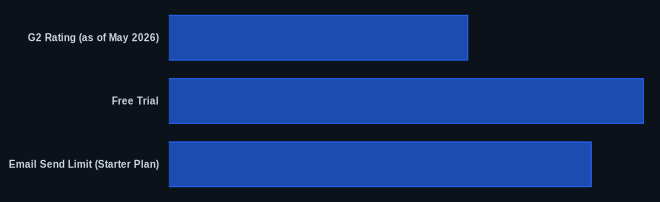
| G2 Rating (as of May 2026) | 4.5/5 stars (Leader) | G2 Reviews |
| User Feedback | Consistently Positive | ActiveCampaign.com |
| Starting Price (1,000 contacts, annual) | $15/month (as of May 2026) | ActiveCampaign Pricing |
| Free Trial | 14-day, no credit card required | ActiveCampaign Pricing |
| Email Send Limit (Starter Plan) | 10x contacts/month | ActiveCampaign Pricing |
| Key AI Capabilities | Conversational campaign generation, agentic onboarding, AI Behavior Customization | ActiveCampaign What's New |
Our Take
We've used ActiveCampaign on projects ranging from lead nurturing for B2B SaaS to e-commerce promotions. What consistently stands out is its capacity to evolve with business needs, especially with the 'Active Intelligence' suite. This isn't just adding AI; it's integrating it in a way that truly changes the workflow, moving from manual setup to agentic execution. This means marketers can spend less time building out campaigns and more time strategizing. Yes, it's pricey, and the email builder still feels a bit stuck in the past, but the sheer power of its automation engine combined with conversational AI is a compelling trade-off for any business serious about deeply personalized customer journeys. If you're a growing business considering ActiveCampaign, how do you weigh the initial learning curve against the long-term benefits of its deep automation and AI capabilities?
FAQ
Q: Does ActiveCampaign offer a permanent free plan for small businesses?
A: No, the platform does not offer a permanent free plan (as of May 2026, per the official pricing page). It provides a 14-day free trial which allows you to test out its features without committing to a subscription. After the trial, you'll need to choose one of its paid tiers (Starter, Plus, Pro, or Enterprise) to continue using the service.
Q: How does ActiveCampaign's AI compare to other marketing automation platforms?
A: ActiveCampaign's 'Active Intelligence' is aggressively pushing towards more autonomous marketing, going beyond simple generative AI. Its conversational interfaces for campaign creation, agentic onboarding, and features like AI Behavior Customization and AI Performance Intelligence are more advanced than what you typically find in Mailchimp or even HubSpot's entry-level AI (as of May 2026, based on feature comparisons). It's designed to assist with complex automation logic rather than just content generation.
Q: What are the main reasons businesses leave ActiveCampaign for competitors?
A: Businesses often switch due to the steep learning curve for new users, the rapidly escalating costs as contact lists grow, or specific frustrations with the email builder. While it's a net gainer from Mailchimp, some users migrate to platforms like Klaviyo for deeper e-commerce integrations or to HighLevel for its agency-focused feature set and white-labeling options (as of May 2026, based on competitor analysis). Others seek out alternatives like Customer.io for event-driven data models in product-led SaaS.
