Shopify's 2026 iteration faces a paradox: it's a sophisticated, AI-infused ecosystem with lauded ease of use, yet a surprising 1 in 10 new stores fail to remain active after 90 days, with an annual merchant churn hitting 28%. This review is for entrepreneurs, remote teams, and small to medium-sized businesses evaluating the platform, specifically those wondering if its user-friendliness translates into sustained business success amidst growing costs and AI-first customer support.
What Is Shopify?
Shopify is a complete e-commerce solution that helps businesses build, run, and scale their online stores. It provides all the necessary tools for product management, order processing, marketing, and sales across multiple channels, making it a go-to for anyone from a solo artisan to a large enterprise selling physical or digital goods. The platform’s strength lies in abstracting away much of the technical complexity of online retail, allowing business owners to focus on their products and customers.
The tool is built for entrepreneurs who want to get an online store up quickly without needing to hire developers, but also offers advanced features for established brands looking to expand. It helps businesses manage everything from inventory and shipping to payments and customer relationships, all within a unified interface.
Key Features
The RenAIssance Edition of 2026 brought over 150 features, emphasizing artificial intelligence across the board. The platform is pushing hard into making e-commerce more intelligent and automated.
AI-Powered Operations
The AI-Powered Sidekick has evolved significantly, moving beyond simple queries to become a proactive operational support system. It helps with tasks like inventory forecasting, marketing campaign suggestions, and even flagging potential customer service issues before they escalate. This means less manual data crunching and more intelligent decision-making for store owners.
The new AI Store Simulation (SimGym), launched in May 2026, is a significant change. It lets you test store design changes, new product launches, or even marketing campaign impacts in a simulated environment before going live. This takes the guesswork out of crucial decisions and helps avoid costly mistakes. The Agentic Commerce Infrastructure, introduced in March 2026, makes your entire product catalog accessible and understandable to AI shopping platforms like ChatGPT. This opens up new avenues for discovery and direct sales through conversational commerce.
Core Store Management & Sales Channels
The platform provides a customizable website builder, unlimited product listings, and a solid backend for managing inventory and orders. Its POS Lite system is included with most plans, making it easy to integrate in-person sales with your online store. In April 2026, B2B features, once exclusive to Shopify Plus, expanded to non-Plus plans. This allows even smaller businesses to offer wholesale pricing, custom catalogs, and company accounts, which is a massive win for brands selling to other businesses.
Multi-channel selling enhancements, rolled out in May 2026, further speed up sales across social media, marketplaces, and your own storefront. You can manage everything from a single dashboard, which simplifies what used to be a fragmented process for many merchants.
Ecosystem & Customization
The App Store remains a cornerstone of the platform's flexibility, offering thousands of integrations to extend functionality from dropshipping to advanced analytics. While its core features are strong, you'll often rely on these third-party apps to tailor the experience. This extensive ecosystem is both a blessing and a curse, as we'll explore later.
For developers, the deprecation of Shopify Scripts by June 30, 2026, in favor of Shopify Functions, marks a significant shift. Functions offer more powerful and flexible customization options for checkout and backend processes, promising better performance and integration. While this means a learning curve for some, it points towards a more scalable customization future for the tool. AI for theme generation is also a new feature, helping merchants quickly create unique store designs without extensive coding.
Marketing & Analytics
Expanded built-in marketing tools, updated in May 2026, provide more ways to reach customers directly. This includes enhanced email marketing capabilities, deeper integration with social media ad platforms, and improved SEO features. The platform also offers analytics to track sales, customer behavior, and marketing performance. Higher-tier plans, like Advanced, come with sophisticated reporting tools to help you dig deeper into your data and make informed decisions.
A new Total Cost Transparency initiative was introduced in May 2026, aiming to give merchants a clearer view of their overall expenses, including app subscriptions and transaction fees. This is a direct response to common user complaints about hidden or accumulating costs.
Pricing
Shopify's tiered pricing structure, as of May 2026 per the official pricing page, caters to different business sizes, but you need to pay close attention to the hidden costs. There isn't a free plan, but a generous 3-day free trial is available, followed by $1 per month for the first three months (as of May 2026, per the official pricing page). This makes it easy to dip your toes in before committing.
- Starter: At $5 per month (as of May 2026, per the official pricing page), this plan is ideal for social selling and linking products directly to social media bios or messages. It lacks a full online storefront, making it best for micro-businesses testing the waters or selling primarily through channels like Instagram and TikTok.
- Basic: This plan costs $39 per month (as of May 2026, per the official pricing page), or $29 per month (as of May 2026, per the official pricing page) when billed annually. It provides a full e-commerce store, a customizable website, unlimited products, and basic POS Lite. You get 2 staff accounts. This is where most small businesses start their journey.
- Grow (formerly 'Shopify'): At $105 per month (as of May 2026, per the official pricing page), or $79 per month (as of May 2026, per the official pricing page) annually, this plan steps things up. It includes 5 staff accounts, improved shipping discounts, and more specific reporting. It's designed for growing businesses that need more operational horsepower and team collaboration.
- Advanced: For larger businesses, the Advanced plan is $399 per month (as of May 2026, per the official pricing page), or $299 per month (as of May 2026, per the official pricing page) annually. You get up to 15 staff accounts, advanced analytics, and the best shipping discounts. This plan is for established merchants with significant sales volume who need deeper insights and more operational capacity.
- Shopify Plus: The enterprise-grade solution starts at $2,300 per month for a 3-year term or $2,500 per month for a 1-year term (as of May 2026, per the official pricing page). For very high-volume merchants, pricing can switch to 0.35% of revenue, capped at $40,000 per month (as of May 2026, per the official pricing page). This plan offers high scalability, dedicated support, and advanced customization for large brands.
Be warned: This gets expensive fast. Hidden costs are a major pain point. If you don't use Shopify Payments, you'll face transaction fees (up to 2% on Basic plans, as of May 2026, per the official pricing page). Essential app subscriptions can quickly add $9-$99 per month (as of May 2026, per the official pricing page) or more, and premium themes typically cost a one-time fee of $100-$400 (as of May 2026, per the official pricing page). You'll also pay for your custom domain and, if you need advanced point-of-sale features, POS Pro costs an additional $89 per month per location (as of May 2026, per the official pricing page). Many users complain about staff account limitations, often requiring a plan upgrade just to add another team member.
Pros and Cons
Like any powerful tool, it comes with its share of benefits and drawbacks. Understanding these helps you make an informed decision.
Pros
- Exceptional Ease of Use and Setup: Getting started is genuinely simple. A Capterra user notes, "The interface is very straightforward, which really helps. I appreciate how Shopify makes the inventory process very easy…" Another G2 reviewer stated, "Overall, it's user-friendly for e-commerce, meshes well with other platforms, and the initial setup was very easy, taking only about fifteen minutes to get up and running." This rapid deployment is a huge advantage for new businesses.
- Comprehensive E-commerce Features: Right out of the box, the platform provides everything you need to sell online, from product listings and order management to marketing tools and secure checkout. It handles the heavy lifting so you don't have to.
- Extensive App Ecosystem: The App Store is vast, offering solutions for almost any business need you can imagine. Want to integrate with a specific shipping provider or add advanced marketing automation? There's an app for that.
- Built-in Payment Processing (Shopify Payments): This simplifies payment collection, often offering competitive rates and a streamlined checkout experience. It integrates well with the rest of your store operations.
- Scalability for Growth: From a small startup to a large enterprise, the tool can grow with your business. You can easily upgrade plans as your needs evolve, with Shopify Plus handling immense traffic and sales volumes.
- Innovative AI-Powered Features: The recent RenAIssance Edition updates, including the evolving Sidekick, SimGym, and Agentic Commerce Infrastructure, position the platform at the forefront of AI in e-commerce. These tools genuinely make operations smarter and more efficient.
Cons
- Rapidly Accumulating Costs: While the base plans seem reasonable, the total cost of ownership can soar. Transaction fees (if not using Shopify Payments), expensive app subscriptions, and premium themes add up quickly. This gets expensive fast, often catching new merchants by surprise.
- Limited Customization Without Coding: Beyond basic theme adjustments, achieving unique design elements or complex functionality often requires writing code or hiring a developer. There are few free, truly professional themes, and the visual builder isn't as intuitive as those found on Wix or Squarespace for non-e-commerce pages.
- Performance Optimization Issues: Some users report struggles with poor page speed and overall store performance, especially as more apps are added. This 'app bloat' can negatively impact user experience and SEO.
- Complicated Checkout Processes/Checkout Leakage: While Shopify Payments simplifies things, complex checkouts with too many steps can lead to abandoned carts. Optimizing this often requires further customization or specific apps.
- Customer Support Quality Decline: This is a significant contention point. Many users report a degraded experience, an over-reliance on AI chatbots, and difficulty reaching knowledgeable human support, particularly for non-Plus users. Support often lacks technical understanding, leading to slow resolution times.
- High Merchant Churn Rate: Despite its ease of use, only 1 in 10 new stores remain active after 90 days, with an annual merchant churn of around 28%. This suggests that while starting a store is easy, sustaining it presents significant challenges that the platform alone doesn't always solve for.
- Migration Challenges to Shopify Functions: The deprecation of Scripts means merchants using custom checkout logic face a migration effort, which can be complex and time-consuming. This disrupts existing setups for many.
Who Should Use Shopify?
This platform is a strong contender for several types of businesses, but it's not for everyone.
It's excellent for new entrepreneurs and small businesses looking to launch an online store quickly without deep technical knowledge. If you're selling physical products and want an all-in-one solution that handles payments, shipping, and basic marketing, the Basic or Grow plans are a great fit. Its intuitive interface and comprehensive features mean you can focus on your products.
Growing businesses and mid-sized teams will find the Advanced plan appealing, especially with its expanded staff accounts and detailed analytics. If you're experiencing increasing sales volume and need more specific reporting and operational control, this tier provides the necessary tools to scale efficiently.
Large enterprises and high-volume merchants should seriously consider Shopify Plus. This tier offers the customization, dedicated support, and scalability needed for complex operations. Brands migrating from systems like Magento or Salesforce Commerce Cloud often choose Plus for its lower total cost of ownership (TCO) and focus on rapid innovation, especially with the new AI features. For instance, a brand with global operations and intricate B2B requirements could use Plus and its expanded B2B capabilities.
However, if you require extreme design flexibility without code, platforms like Wix or Squarespace might be better suited, though they lack the e-commerce depth. If you demand complete ownership of your site's code and server, along with absolute control over SEO, WooCommerce offers a compelling, albeit more hands-on, alternative. For businesses prioritizing built-in enterprise features without relying heavily on apps, BigCommerce offers a strong package and boasts zero platform transaction fees.
Data at a Glance
| Metric | Value | Source |
|---|---|---|
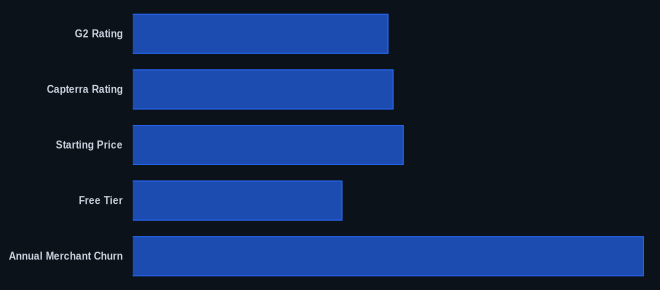
| G2 Rating | 4.4/5 | G2 Shopify Reviews |
| Capterra Rating | 4.5/5 | Capterra Shopify Reviews |
| Starting Price | $5/month | Shopify Pricing |
| Free Tier | No (3-day trial + $1/month for 3 months) | Shopify Pricing |
| Annual Merchant Churn | ~28% | SaaSBinder Research |
| Integrations | 7,000+ apps | Shopify App Store |
Our Take
Shopify stands at a fascinating crossroads in 2026. On one hand, its commitment to AI, with features like SimGym and the Agentic Commerce Infrastructure, is genuinely pushing the boundaries of what's possible in e-commerce. We see a future where stores run themselves with intelligent assistance, and the platform is clearly leading that charge. But then you encounter the reality of its customer support—a frustrating, AI-first experience that feels miles behind its product innovation. It’s a paradox: brilliant AI for commerce, baffling AI for customer service. The high churn rate, despite the platform's ease of use, also tells a sobering story; starting a store is one thing, thriving is another, and the platform still has work to do in supporting long-term merchant success beyond initial setup.
With Shopify's increasing focus on AI for merchants, how will the current state of its AI-first customer support evolve, and will it close the gap with its product innovation to reduce merchant churn?
FAQ
What are the biggest hidden costs when using Shopify?
The most significant hidden costs typically include transaction fees if you opt out of Shopify Payments, expensive third-party app subscriptions (many essential functions require them), and premium themes that can cost hundreds of dollars upfront (as of May 2026, per the official pricing page). Additionally, advanced POS features through POS Pro come with an extra monthly fee, and limitations on staff accounts often force plan upgrades. Always factor these into your budget.
Is it really easy to use for new businesses, considering the high churn rate?
Yes, the platform is genuinely easy to use for initial setup and daily operations. A G2 reviewer noted, "I like how user-friendly Shopify is. It's very easy to learn, even with no web experience." This ease helps new businesses get online quickly. However, the high churn rate (only 1 in 10 stores remain active after 90 days) suggests that while the platform is user-friendly, the challenges of running a profitable e-commerce business—marketing, inventory, customer service, and competition—extend far beyond the tool itself.
How does Shopify's new AI compare to what competitors offer?
Its 2026 AI innovations, particularly AI Store Simulation (SimGym) and Agentic Commerce Infrastructure, are leading the market in proactive operational support and making product catalogs accessible to external AI agents. While competitors like BigCommerce offer some AI for product descriptions or recommendations, Shopify is pushing into more strategic, foundational AI for store management and discovery. This forward-thinking approach gives it a distinct edge in leveraging AI for complex e-commerce challenges.