Gleap, rated 4.8/5 stars on G2, offers a compelling all-in-one customer success platform for product-led SaaS, but its per-seat pricing model can lead to significant cost increases as teams scale beyond its included user limits. If your product is the core of your business and you're aiming to consolidate fragmented customer feedback, AI-powered support, and bug reporting, this platform, particularly with its continuously evolving AI, provides substantial value despite potential scaling costs.
What Is Gleap?
Gleap positions itself as the "Customer-Facing Success Platform for Product-Led SaaS," offering an all-in-one approach to customer interaction. It's built for early and growth-stage SaaS teams aiming to speed up their customer support and feedback loops without needing a sprawling tech stack. The platform brings together AI-driven support, live chat functionality, direct in-app bug reporting for developers, and customer feedback collection. This focus on integration directly addresses the common pain point of fragmented customer data and inefficient workflows that many product teams face.
The tool directly tackles the operational challenges of managing a growing user base. Instead of adopting one solution for chat, another for bug tracking like Sentry, and a third for feedback, it simplifies your stack. For companies where the product itself is the primary growth engine, getting instant, actionable insights from users is paramount. The platform makes it easier for users to report issues and provide feedback right from inside your application, which means higher quality data for your product and development teams.
Key Features
The strength of this platform lies in its integrated feature set, designed to cover multiple facets of customer success and product iteration. These aren't just standalone tools bolted together; they work in concert to give you a clearer picture of your user experience.
AI-Powered Support and Chat Automation
The platform excels here and aligns with the market's rapid shift towards AI integration. The AI support catches common queries and often resolves them without human intervention, which has notably improved efficiency for many small teams. This capability, significantly enhanced with better natural language processing in Q4 2025 updates, means your support staff can focus on complex issues instead of repetitive tasks. It learns from your knowledge base and past interactions, offering instant, personalized assistance around the clock.
The live chat feature integrates with the AI, allowing for quick hand-offs to human agents when needed. You can customize chat widgets to match your brand, providing a consistent user experience. For a product manager, this means fewer direct queries landing in your inbox and more detailed, categorized issues reaching your team. A Capterra user noted: "The AI support has been a game-changer for our small team, allowing us to handle more customer queries without scaling up support staff. It's truly efficient."
In-App Bug Reporting
Anyone who's managed a software product knows the pain of vague bug reports. The platform's in-app bug reporting feature is useful because it captures critical context automatically. When a user reports a bug, it often includes screenshots, console logs, device information, and even a recording of the user's session leading up to the issue. This level of detail drastically cuts down on back-and-forth communication with users and helps your development team diagnose and fix problems faster.
According to a G2 reviewer: "Gleap has transformed how we collect user feedback. The in-app reporting is seamless and our development team loves the detailed bug reports." This kind of direct, contextual feedback is invaluable for maintaining product quality and user satisfaction.
Customer Feedback Collection
Beyond bugs, the software provides tools for collecting customer feedback. You can deploy custom forms, in-app surveys, and feedback widgets that were greatly enhanced in Q1 2026. This means you can gather anything from feature requests to general sentiment without forcing users to leave your application. The ability to segment feedback by user type, feature, or sentiment helps product teams prioritize their roadmaps effectively.
"We struggled with consolidating feedback from various channels until we found Gleap. Now everything is in one place, making our product roadmap decisions much easier," noted a Head of Product on G2. This consolidation is crucial for data-driven product decisions. The platform ensures that feedback from various touchpoints—be it a chat conversation, a bug report, or a direct survey—all feeds into a central repository, making it easier to identify trends and validate hypotheses.
Analytics and Reporting
Understanding customer sentiment and product usage is vital for growth. The platform's analytics dashboard, significantly improved in Q3 2026, offers deeper insights. You can track feedback trends, monitor support query resolution times, and analyze user engagement with specific features or sections of your product. This data lets you proactively identify pain points, measure the impact of product changes, and ultimately make more informed business decisions.
The reports aren't just numbers; they provide context. You can filter by project, team member, or time period to get a granular view of your customer success operations. For an entrepreneur, this dashboard provides a quick pulse check on customer health and product stickiness, allowing for rapid adjustments to strategy.
Integrations and Workflow Automation
No modern SaaS tool lives in a vacuum, and Gleap understands this. Its ability to integrate with popular project management tools like Jira, Asana, and Trello (a Q2 2026 update) is a significant advantage. This means bug reports and feedback items can automatically create tasks in your development workflow, eliminating manual data entry and ensuring nothing falls through the cracks. It also offers unlimited integrations for paid plans, meaning you can connect it with various other tools in your stack.
This syncing ensures that customer-facing teams and product development teams are always on the same page. Feedback isn't just collected; it's immediately actionable within the tools your team already uses daily. This automation reduces friction and speeds up the entire feedback-to-fix cycle.
Pricing
Understanding Gleap's pricing is crucial, especially given the market trend of evolving models and potential for unexpected cost increases. The platform primarily uses a per-seat model, which can indeed get expensive fast as your team scales. However, its tiered structure aims to provide clear value at each level.
As of July 2026, per the official Gleap pricing page, here are the plans:
-
Free Plan: This is a great starting point for solo founders or very small teams. It includes 1 team member, 2 projects, 2 integrations, 2GB storage, and 100 feedback items/bugs/chats per month. You get essential features to test the waters without commitment. If you're just starting to collect structured feedback, this is perfect.
-
Starter Plan: Priced at $29 per month (as of July 2026, per the official pricing page) when billed annually, or $39 monthly (as of July 2026, per the official pricing page). This plan significantly expands capabilities. You get 3 team members, unlimited projects, unlimited integrations, 10GB storage, and 1,000 feedback items/bugs/chats per month. It also adds crucial features like custom forms, advanced reporting, and priority support. For growing product-led SaaS companies with a small dedicated support or product team, this is often the sweet spot. You get serious functionality without immediately breaking the bank.
-
Growth Plan: This plan costs $99 per month (as of July 2026, per the official pricing page) when billed annually, or $119 monthly (as of July 2026, per the official pricing page). Designed for expanding teams, it includes 10 team members, unlimited projects, unlimited integrations, 50GB storage, and 5,000 feedback items/bugs/chats per month. This tier adds more advanced features such as custom branding, API access, and a dedicated account manager. If your customer success team is growing and you need deeper customization and integration into your tech stack, the Growth Plan offers substantial value. The dedicated account manager alone can be worth it for optimizing your setup and ensuring you're getting the most out of the platform.
-
Enterprise Plan: For larger organizations with unique needs, this offers custom pricing (as of July 2026, per the official pricing page). You get unlimited team members, projects, integrations, storage, and feedback items/bugs/chats per month. This plan also includes critical enterprise-grade features like SSO (Single Sign-On), SAML, potential on-premise deployment options, and custom legal agreements. If you have strict security or compliance requirements, or need tailor-made solutions, Enterprise is the way to go.
It's important to consider the "per-seat" model. While the base plans offer a good number of team members, adding more beyond the included count will increase your monthly bill. This is a common SaaS pricing strategy, but it's vital to project your team's growth to avoid unexpected cost escalations. The market currently sees a rise in hybrid and consumption-based models which can hide costs, but Gleap's tiered structure provides clearer, albeit scaling, expenses.
Pros and Cons
Like any powerful tool, Gleap has its strengths and areas where it might not fit every business perfectly.
Pros:
- All-in-One Solution: Consolidates live chat, AI support, bug reporting, and feedback, reducing tool sprawl and simplifying workflows. This means less context-switching for your team and a unified data source.
- Powerful AI Support: The AI-powered chat and support automation significantly reduce the load on human support teams, leading to faster query resolution and improved efficiency, especially for common issues.
- Detailed In-App Bug Reporting: Automatically captures critical technical data, screenshots, and session recordings, making bug diagnosis and resolution much faster for development teams.
- Centralized Customer Feedback: Consolidates feedback from various channels into a single dashboard, simplifying product roadmap planning and decision-making.
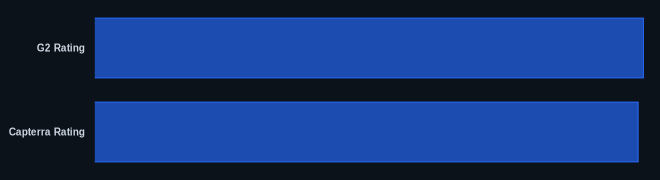
- High User Satisfaction: Strong ratings on G2 (4.8/5 stars based on 150+ reviews) and Capterra (4.7/5 stars based on 80+ reviews) indicate a generally positive user experience and effective performance.
- Active Development: Regular product updates, like enhanced AI, new feedback widgets, and expanded integrations, show a commitment to continuous improvement.
- Excellent for Product-Led SaaS: The direct integration into the product experience aligns perfectly with how product-led companies gather insights and interact with users.
Cons:
- Learning Curve for Advanced Features: Setting up and customizing advanced features and integrations can require some technical expertise, potentially posing a challenge for smaller teams without dedicated technical staff.
- Potential for Scaling Costs: While transparent, the per-seat pricing model means costs can increase notably as your team grows, which might catch rapidly expanding companies off guard if not budgeted carefully.
- AI Limitations: While effective for common queries, the AI may still require human intervention for highly complex, nuanced, or unique customer issues. It's an assistant, not a full replacement.
- Occasional UI Glitches: Some users have reported minor UI glitches after major updates, though these are typically resolved quickly. This can be a minor annoyance for daily users.
- Not a Full-Fledged CRM: While excellent for customer success and feedback, it doesn't replace a comprehensive CRM like Salesforce or HubSpot for managing full customer lifecycle sales and marketing data.
Who Should Use Gleap?
Gleap is designed with a very specific user in mind, and if you fit this profile, it could be a powerful asset for your business.
First and foremost, it's ideal for Product-Led SaaS companies. If your product is your main acquisition and retention channel, and you rely heavily on in-product experiences for user interaction and feedback, this platform will resonate with your workflow. It allows you to gather contextual feedback directly where users are experiencing your product.
Early to growth-stage SaaS teams will find significant value. Smaller teams often struggle with tool sprawl and budget limitations for multiple specialized tools. The platform’s all-in-one approach helps these teams consolidate, speed up operations, and manage customer interactions more efficiently without needing a large support staff. A Product Manager or Head of Product at a startup would immediately see the benefit of having all feedback in one place.
Teams that prioritize AI automation in customer support are perfect candidates. If you're looking to offload a significant portion of routine customer queries to AI and free up your human agents for more complex tasks, this tool delivers. This is especially relevant for businesses scaling quickly but wanting to keep support costs in check.
Finally, companies aiming to reduce their overall tech stack complexity and costs will appreciate the platform. Instead of subscribing to separate services for live chat (like Intercom), bug reporting (like Bugsnag), and feedback (like UserVoice), you get a unified solution. This can lead to cost savings and a simpler vendor management process. If your team is struggling with fragmented customer data from various tools, the platform brings it all together.
It's not for everyone. If you're a very large enterprise needing highly specialized, separate tools for each function (e.g., a massive call center using Zendesk exclusively for support), or a company where the product isn't the primary customer interface (e.g., a service business), it might be overkill or not align with your core needs.
Data at a Glance
| Metric | Value | Source |
|---|---|---|
| G2 Rating | 4.8/5 stars (based on 150+ reviews) | G2 Reviews |
| Capterra Rating | 4.7/5 stars (based on 80+ reviews) | Capterra Reviews |
| Starting Price | $0 (Free Plan, as of July 2026) | Gleap Pricing |
| Feedback Items (Free) | 100 per month (as of July 2026) | Gleap Pricing |
| Team Members (Free) | 1 (as of July 2026) | Gleap Pricing |
| Integrations | 2 (Free plan, as of July 2026), Unlimited (Paid plans, as of July 2026) | Gleap Pricing |
| Core Focus | Customer-Facing Success for Product-Led SaaS | Gleap Official Site |
Our Take
We've seen countless SaaS tools promise "all-in-one" solutions, but Gleap actually delivers on much of that promise for a specific niche: product-led SaaS. Its strategic focus on AI integration, especially as AI tools rapidly ascend the ranks of popularity, gives it a distinct advantage. The real value isn't just in having live chat or bug reporting, but in how intelligently these features work together, underpinned by smart AI automation. This integrated approach dramatically cuts the steps from user feedback to product improvement, leading to faster iterations and happier customers. Yes, the per-seat pricing can bite if you're not planning carefully for team growth, but it's important to remember that the average G2 rating is 4.8/5 stars, indicating strong user satisfaction despite potential cost concerns.
If your product is a growth engine, could this tool's all-in-one approach save you more in efficiency than you spend on scaling seats?
FAQ
1. Is Gleap suitable for very small startups or solo founders?
Absolutely. The Free Plan (as of July 2026) is specifically designed for single team members or very small operations, offering 1 team member, 2 projects, and 100 feedback items/bugs/chats per month. It's a great way to start collecting structured feedback and offering basic in-app support without any upfront cost. As you grow, the Starter Plan at $29 per month (billed annually, as of July 2026) provides a significant leap in capabilities for a modest investment, making it highly scalable for early-stage companies.
2. How effective is Gleap’s AI support compared to dedicated AI customer service platforms?
Gleap's AI support is highly effective for automating common customer queries and providing instant responses, especially with its recent Q4 2025 enhancements to natural language processing. It significantly reduces the burden on human support staff, allowing them to focus on more complex issues. While it won't replace a full-fledged, highly specialized AI platform like those custom-built for large enterprises with millions of unique data points, for product-led SaaS companies, it acts as an intelligent first line of defense that genuinely boosts efficiency and customer satisfaction. It's about smart automation within the context of your product, not general-purpose AI.
3. What are the real cost implications of using Gleap as my team grows?
The primary cost implication comes from Gleap's per-seat pricing model. While the Starter and Growth plans include 3 and 10 team members respectively (as of July 2026), adding more users beyond these thresholds will increase your monthly bill. For example, if you're on the Growth Plan at $99 per month (as of July 2026) and need to add an 11th team member, you'd likely incur an additional per-seat charge or need to upgrade to a custom Enterprise plan. It's crucial to project your team's growth and factor in these potential scaling costs. However, the transparent tiered pricing avoids the unexpected cost spikes often seen with consumption-based models, allowing for clearer budget planning as you expand.