Shopify, with its 2026 AI advancements, is a formidable eCommerce platform. It’s an AI-powered growth engine that fundamentally changes how small to medium businesses (SMBs) operate online, empowering entrepreneurs, remote teams, and growing businesses to sell physical or digital products without hiring a full development team.
What Is Shopify?
Shopify is a fully hosted eCommerce platform that helps businesses of all sizes create, run, and scale their online stores. It provides everything from storefront design and product catalog management to payment processing, shipping, and marketing tools. The platform handles the technical complexities of web hosting, security, and infrastructure, allowing merchants to focus on sales and business growth. It's built for those who want a powerful online store ready to launch quickly, preferring an integrated ecosystem over a fragmented, self-managed setup.
The tool provides a solid suite of features, letting anyone from a solopreneur selling handmade goods to a scaling brand with thousands of products manage their entire sales operation. Its core strength lies in its user-friendly interface combined with an expansive app store, letting you customize your store's functionality without needing to write a single line of code. For any business owner aiming for a strong online presence and efficient operations, the platform cuts through much of the technical noise.
Key Features
Shopify's 2026 feature set is heavily influenced by deep integration of artificial intelligence, elevating the merchant experience and automating previously time-consuming tasks.
AI-Powered Content and Marketing
The heart of the platform's 2026 updates is Shopify Magic AI. This isn't just a basic content generator; it's an enhanced system capable of crafting nuanced, SEO-optimized product descriptions, compelling blog posts, and effective marketing copy. It learns from your brand voice and product data, producing content that genuinely resonates with your target audience. You'll spend less time staring at a blank page and more time strategizing.
Advanced Customer Service Automation
Customer support gets a massive upgrade with sophisticated AI-Powered Customer Service chatbots. These aren't simple FAQs; they handle a wide array of customer queries, offer personalized product recommendations based on browsing history, and provide real-time order tracking. This significantly reduces the manual support load on your team, letting them focus on complex issues. According to a Capterra.com review: "The new AI tools for product descriptions and customer service chatbots have saved my team countless hours. It's a game-changer for efficiency."
Visual AI for Merchandising
Managing product images used to be a chore, but not anymore. The platform now offers Visual AI for Merchandising. This includes AI-driven tools for instant background removal, one-click image editing, and automatic product tagging. It means your product catalog looks professional with minimal effort, and customers can find items faster. This level of visual automation saves significant time and money on design resources.
Personalized Shopping Experiences
Boosting conversions is easier with Personalized Shopping Experiences. The platform’s advanced AI algorithms analyze user behavior to deliver highly relevant product recommendations. This isn't just "customers also bought"; it's a dynamic, adaptive system that tailors the shopping journey for each visitor. It makes your store feel more intuitive and customer-centric, often leading to higher average order values.
Improved Point of Sale (POS) System
For businesses with physical locations, the Improved POS System brings better inventory synchronization between online and offline channels. You also get enhanced offline capabilities, ensuring transactions can continue even if the internet goes down. This unified commerce approach means you're always on top of your stock, whether selling in-store or online.
International Selling with Shopify Markets Pro
Expanding globally has never been simpler with Shopify Markets Pro. This feature offers enhanced localization for currencies, languages, and duties across various international markets. It manages the complexities of cross-border trade, from calculating taxes to handling customs, so you can reach new customers worldwide without the logistical headaches.
Pricing
Shopify's pricing in 2026 reflects its expanded capabilities, particularly the integrated AI features. It offers several tiers to suit different business stages, with a clear incentive for annual billing.
As of June 2026, per the official pricing page:
- Shopify Starter: This entry-level plan costs $5/month. It's ideal for selling through social media and messaging apps, a perfect fit for a side hustle or testing a product idea without a full storefront.
- Basic Shopify: Priced at $39/month (as of June 2026, per the official pricing page), or $29/month when billed annually. This plan is designed for new businesses needing essential eCommerce features. It includes unlimited products, 24/7 support, fraud analysis, and an online store. Online credit card rates are 2.9% + $0.30 per transaction.
- Shopify: This plan is $105/month (as of June 2026, per the official pricing page), or $79/month when billed annually. It’s suitable for growing businesses that need more staff accounts and lower transaction fees. Online credit card rates drop to 2.6% + $0.30. This tier provides additional reporting features and international selling capabilities with Shopify Markets.
- Advanced Shopify: For scaling businesses, this plan costs $399/month (as of June 2026, per the official pricing page), or $299/month when billed annually. It offers the lowest online credit card rates at 2.4% + $0.30, advanced reporting, and calculated shipping rates from third-party carriers. It's built for high-volume merchants seeking maximum efficiency and control.
- Shopify Plus: This is an enterprise-level solution with custom pricing. It caters to large businesses with high sales volumes and complex operational needs, offering dedicated support, advanced API access, and greater customization options.
All core plans include unlimited products, 24/7 support, and fraud analysis. A crucial point for business owners: if you don't use Shopify Payments, the platform charges an additional transaction fee (2.0% for Basic, 1.0% for Shopify, 0.5% for Advanced) on top of your chosen payment gateway's fees. On a Reddit.com r/shopify thread, one user noted: "While Shopify is powerful, the transaction fees on external payment gateways can really eat into profits. It pushes you to use Shopify Payments." This effectively nudges you towards their integrated payment solution.
Pros and Cons
Like any powerful platform, Shopify comes with its own set of advantages and challenges. Knowing these helps you decide if it’s the right fit.
Pros:
- Exceptional Ease of Use: Launching an online store is incredibly straightforward, even for non-technical users. According to a G2.com user review: "Shopify made launching my online store incredibly straightforward, even with zero coding knowledge."
- Powerful AI Integration: The new AI tools for content generation, customer service, and merchandising are genuine time-savers and conversion boosters.
- Scalability: The platform grows with your business, from a Starter plan to Shopify Plus. You won't outgrow the core functionality quickly.
- Vast App Ecosystem: The Shopify App Store offers thousands of integrations for almost any niche functionality you can imagine. This is a lifesaver for adding specialized features.
- Reliable Hosting and Security: As a fully hosted solution, it handles all the technical backend, ensuring your store is secure, fast, and always online.
- 24/7 Support: Round-the-clock customer support is available across all plans, providing peace of mind.
Cons:
- Transaction Fees (if not using Shopify Payments): The additional percentage charged on sales when using third-party payment gateways can significantly impact profit margins. This feels like a forced decision.
- Cost of Premium Apps: While the app store is extensive, many powerful apps come with recurring monthly fees, which can quickly inflate your overall expenses.
- Customization Limitations: While theme customization is solid, deep-level design or functional changes often require Liquid coding expertise or custom app development.
- Ongoing Cost: The base plan, combined with necessary apps, can get expensive fast, especially for small businesses on a tight budget. Some long-term merchants report growing concern over this complexity and cost.
- Limited Free Themes: The selection of truly high-quality free themes is somewhat restricted, often pushing users towards paid options.
Who Should Use Shopify?
Shopify is best for entrepreneurs, remote teams, and small to medium-sized businesses that prioritize ease of use, scalability, and a rich feature set without needing deep technical expertise.
- New eCommerce Entrepreneurs: If you're launching your first online store and need an intuitive platform that guides you through the process, the Basic plan is an excellent starting point. It lets you focus on your products, not server configurations.
- Growing SMBs: Businesses experiencing increasing sales volume will find the "Shopify" and "Advanced Shopify" plans offer the tools to scale, manage inventory efficiently, and reduce transaction costs as they grow.
- Brands Valuing AI Automation: Any business looking to use new AI for content creation, customer service, and personalized marketing will benefit immensely from the 2026 AI integrations.
- Omnichannel Retailers: With its enhanced POS system and unified inventory, it’s a strong choice for businesses selling both online and in physical stores.
- Dropshippers and Print-on-Demand Businesses: The platform's extensive app store makes it easy to integrate with dropshipping suppliers and print-on-demand services, automating much of the fulfillment process.
It might be less ideal for highly technical users who crave absolute control over their hosting environment and code, or those on an extremely tight budget who want to avoid recurring app fees. For them, open-source alternatives like WooCommerce might offer more flexibility, albeit with a steeper learning curve and more self-management.
Data at a Glance
| Metric | Value | Source |
|---|---|---|
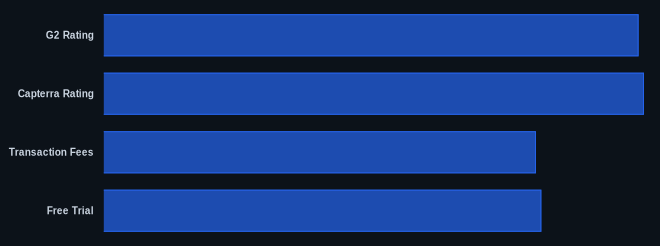
| G2 Rating | 4.4 out of 5 stars | G2.com/products/shopify |
| Capterra Rating | 4.5 out of 5 stars | Capterra.com/p/146036/Shopify/ |
| Starting Price | $5/month (Shopify Starter, as of June 2026, per the official pricing page) | Shopify.com/pricing |
| Transaction Fees | 2.9% + $0.30 to 2.4% + $0.30 (online credit cards, Shopify Payments) | Shopify.com/pricing |
| App Store Integrations | Thousands | Shopify App Store |
| Free Trial | Yes (typically 3 days, then $1/month for first 3 months on select plans) | Shopify.com |
| 24/7 Support | Yes | Shopify.com |
Our Take
We've used the platform for various projects, from launching a niche apparel store to powering a digital product marketplace. The 2026 AI advancements feel less like incremental updates and more like a significant strategic pivot, putting truly powerful automation into the hands of everyday merchants. This isn't just about making things easier; it's about fundamentally leveling the playing field against larger enterprises. Yes, the cumulative cost of apps and those external payment gateway fees can sting, forcing you into their ecosystem. But if you value your time, want sophisticated AI tools without hiring data scientists, and need a platform that simply works without constant maintenance, the investment often pays for itself in efficiency and boosted conversions. This makes it a default choice for serious online sellers.
Is the promise of AI automation worth the potential cost of premium apps and the push towards Shopify Payments for your specific business?
FAQ
Q: Are the transaction fees mandatory if I use a payment gateway other than Shopify Payments?
A: Yes, if you choose an external payment gateway like PayPal or Stripe, Shopify will charge an additional transaction fee (2.0% for Basic, 1.0% for Shopify, 0.5% for Advanced) on top of the fees charged by your chosen gateway. This is why many merchants opt for Shopify Payments to avoid double charges and keep costs down.
Q: How effective are the new AI tools for content creation and customer service?
A: The 2026 AI tools, particularly Shopify Magic AI for content and the AI-Powered Customer Service chatbots, are surprisingly effective. They're designed to handle a wide range of tasks, from generating SEO-optimized product descriptions to answering complex customer queries and providing product recommendations. These features can significantly reduce manual workload and improve customer satisfaction, making operations more efficient.
Q: Is Shopify suitable for a small business just starting out, or is it better for established brands?
A: Shopify is excellent for both new small businesses and established brands, thanks to its tiered pricing and scalability. The Shopify Starter plan at $5/month (as of June 2026, per the official pricing page) or Basic Shopify at $39/month (as of June 2026, per the official pricing page, or $29/month annually) are very accessible for new entrepreneurs. As your business grows, you can easily upgrade to higher-tier plans like Shopify or Advanced Shopify to access more features and lower transaction rates, ensuring the platform scales with your success.