Shopify's "AI-powered" promises clash with a surprising reality in 2026: most users aren't seeing a financial edge from the new tools, and non-AI adopters are actually growing profits faster. This platform is still a go-to for many direct-to-consumer brands and SMBs aiming for quick setup and reliable sales, but its escalating costs and a growing reliance on AI support are pushing some merchants to re-evaluate its long-term value.
What Is Shopify?
It's a complete e-commerce platform that lets you build an online store, manage products, process payments, and fulfill orders. For entrepreneurs starting their first online venture or small businesses looking to scale their digital sales without getting bogged down in server management or complex coding, the software offers a powerful, all-in-one solution. The platform handles everything from website hosting to payment processing, letting merchants focus on selling.
The software simplifies online retail, providing tools for inventory, marketing, and multi-channel sales across platforms like Amazon, Walmart, and even social media. Its recent updates heavily lean into AI for operational efficiency and personalization, aiming to give merchants more time back while enhancing customer experiences.
Key Features
The platform continually evolves, with its Summer '25 "Horizons" and Winter '26 "RenAIssance" Editions bringing over 150 new merchant-facing updates. These range from fundamental operational improvements to advanced AI functionalities.
Core E-commerce & Store Management
At its heart, the tool provides a user-friendly interface for setting up and running an online store. Getting started is quick; according to a G2 reviewer: "Overall, it's user-friendly for e-commerce, meshes well with other platforms, and the initial setup was very easy, taking only about fifteen minutes to get up and running." Inventory management is a standout, especially for businesses with many product variations. A Capterra user noted: "The interface is very straightforward, which really helps. I appreciate how Shopify makes the inventory process very easy, especially when dealing with trading cards that have so many variations."
You get tools for managing products, processing orders, and handling customer data. Recent additions include Barcode Support on Inventory Shipments (May 2026) for smoother logistics and a POS Cash Management Overhaul (April 2026) for physical retail operations. The conversion-optimized checkout, Shop Pay, remains a core strength, reducing friction for buyers and improving conversion rates significantly.
AI Magic: Shopify Magic
Shopify has invested heavily in artificial intelligence, consolidating various features under the umbrella of 'Shopify Magic.' These are widely available across plans, aiming to automate and personalize store operations:
- Sidekick AI Assistant: This intelligent assistant helps with multi-step tasks, from drafting marketing emails to suggesting store improvements. It proactively recommends actions with Sidekick Pulse (April 2026).
- AI-Powered Personalization: The platform learns from customer behavior to offer tailored product recommendations and browsing experiences.
- AI Product Description Generation: Write compelling product copy instantly, saving hours of manual work.
- AI Image Editing and Visual Enhancement: Tools to optimize product photos, remove backgrounds, or enhance image quality directly within the admin.
- AI Chat Assistant: Automates customer service responses, handling common queries and freeing up staff.
- AI Email Flow Creation: Generate engaging email marketing campaigns and automated flows for abandoned carts or welcome series.
- Agentic Commerce Dashboard (June 2026): This new feature lets your products be discoverable and purchasable by external AI agents, like advanced versions of ChatGPT, opening up new sales channels.
Despite this solid suite of AI tools, a surprising 2026 eComFuel Trends Report found that while 72% of store owners adopted AI, it yielded "zero financial edge." Non-AI adopters actually saw faster profit growth, raising questions about the ROI of these advanced features for many businesses.
B2B and Enterprise Capabilities
Historically, deeper B2B features were exclusive to Shopify Plus. The platform has now democratized access, with features like company profiles, custom pricing, and wholesale channels becoming available on non-Plus plans. This significantly expands its appeal for businesses selling both to consumers and other businesses. For larger enterprises, Multiple Legal Entities via Shopify Payments (June 2026) is a critical update, simplifying operations for companies with complex corporate structures or international divisions.
Platform & Developer Tools
Shopify provides a rich ecosystem for developers and merchants to customize their stores. Checkout Extensibility, once a Plus-exclusive feature allowing deep customization of the checkout process, is now available to all paid plans. This changes the game for brands needing bespoke checkout flows without the Plus price tag.
However, a major developer-facing change was the deprecation of Shopify Scripts (April 15, 2026 / June 30, 2026), requiring migration to Shopify Functions. This move aims for better performance and extensibility but can mean significant refactoring for stores relying on older scripts. For faster site loads, Per-page CSS Scoping (April 2026) was introduced, ensuring styles load only where needed.
The platform also boasts expanded native marketing and multi-channel capabilities. This means easier integration with major marketplaces like Amazon, Walmart, and eBay, alongside content platforms like WordPress.
Pricing
Shopify's pricing structure has seen significant changes and continues to be a point of contention for many users, particularly regarding additional costs. As of October 2026, per the official Shopify pricing page:
- Starter: $5/month (as of June 2026, per the official pricing page). This plan is purely for social selling, allowing you to sell products through messaging apps, social media, or email with a basic checkout. It’s not a full online store builder.
- Basic: $39/month (as of June 2026, per the official pricing page) (or $29/month when billed annually). This plan is for new e-commerce businesses. It includes an online store, unlimited products, basic reports, and 2 staff accounts. Transaction fees for Shopify Payments are 2.9% + $0.30 (as of June 2026, per the official pricing page). Using third-party payment gateways incurs an additional 2.0% (as of June 2026, per the official pricing page) fee.
- Grow (formerly Shopify plan): $105/month (as of June 2026, per the official pricing page) (or $79/month when billed annually). Designed for growing businesses, this plan offers more advanced reporting, 5 staff accounts, and lower transaction fees. Shopify Payments fees drop to 2.7% + $0.30 (as of June 2026, per the official pricing page), and third-party gateway fees are 1.0% (as of June 2026, per the official pricing page).
- Advanced: $399/month (as of June 2026, per the official pricing page) (or $299/month when billed annually). This tier suits scaling businesses needing advanced reporting, third-party calculated shipping rates, and more staff. You get 15 staff accounts. Shopify Payments fees are 2.5% + $0.30 (as of June 2026, per the official pricing page), and third-party gateway fees are 0.6% (as of June 2026, per the official pricing page).
- Shopify Plus: Starts at $2,300/month (3-year term, as of June 2026, per the official pricing page) or $2,500/month (1-year term, as of June 2026, per the official pricing page). This is for high-volume merchants and large enterprises. Pricing can also be 0.35% of revenue, capped at $40,000/month (as of June 2026, per the official pricing page). Credit card rates are negotiable, typically around 2.15% + $0.30 (as of June 2026, per the official pricing page), with a third-party gateway surcharge of 0.20% (as of June 2026, per the official pricing page). It includes extensive customization, dedicated support, and higher API limits.
A 3-day free trial is available, followed by an introductory offer of $1/month (as of June 2026, per the official pricing page) for the first three months on Basic, Grow, or Advanced plans.
Recent Price Hikes and Hidden Costs:
Pricing increased significantly in early 2024. The Basic plan jumped from $29 to $39/month (a 34% increase, as of June 2026, per the official pricing page), the Standard (now Grow) plan from $79 to $105/month (33%, as of June 2026, per the official pricing page), and Shopify Plus (1-year term) from $2,000 to $2,500/month (25%, as of June 2026, per the official pricing page). Additionally, the number of custom markets included dropped from 50 to three, with extra markets costing $59/month (as of June 2026, per the official pricing page) each.
Users frequently complain about the cumulative costs:
- Third-Party Transaction Fees: If you don't use Shopify Payments, you'll pay an additional percentage on every sale (2.0% on Basic, 1.0% on Grow, 0.6% on Advanced, 0.15%-0.20% on Plus, as of June 2026, per the official pricing page). This adds up fast, especially for established businesses already using other payment processors.
- App Ecosystem Costs: A Capterra reviewer stated: "There is a lot of functionality that I feel should be included in the base platform, but instead I need to pay a monthly subscription for a plug-in." The app store is vast, but most useful apps come with monthly fees. The average merchant spends around $120/month (as of June 2026, per the official pricing page) on apps, which can push total platform costs well beyond the advertised plan price.
- Limited Staff Accounts: Lower tiers offer very few staff accounts (2 on Basic, 5 on Grow), forcing growing teams to upgrade plans or share logins, which is a security risk.
- Product Variant Limits: If you sell products with many variations (size, color, material), you can quickly hit limits, requiring workarounds or paid apps.
- Shopify Tax Fees: After $100,000 in sales (as of June 2026, per the official pricing page), the platform charges a 0.35% (as of June 2026, per the official pricing page) fee for its Shopify Tax service, capped at $100 per month (as of June 2026, per the official pricing page).
- Marketplace Connect Fees: For selling across multiple marketplaces, this feature charges 1% per order (as of June 2026, per the official pricing page) after 50 free orders, capped at $99/month (as of June 2026, per the official pricing page).
Pros and Cons
Like any powerful tool, it comes with clear advantages and frustrating drawbacks.
Pros
- Ease of Use & Quick Setup: You can launch a fully functional store in minutes. The dashboard is intuitive, and getting products online is straightforward. This is its biggest selling point for new merchants.
- Solid E-commerce Features & Tools: Beyond the basics, you get a wide range of tools for order management, marketing, analytics, and multi-channel selling. The platform delivers core functionality that works reliably.
- Reliable Infrastructure & Scalability: The software handles traffic spikes and growth easily. Outages are rare but impactful when they occur (more on that in Cons). For the most part, you don't worry about servers crashing.
- Conversion-Optimized Checkout (Shop Pay): This feature is a proven winner, speeding up the purchase process and significantly boosting conversion rates for many stores.
- Vast App Ecosystem: While it's a cost driver, the sheer breadth of apps means you can extend your store's functionality to almost anything you need, from advanced SEO to dropshipping integrations.
Cons
- High Cumulative Costs from Apps and Transaction Fees: This gets expensive fast. Between the required apps for advanced features and transaction fees if you don't use Shopify Payments, monthly bills can easily be triple your base plan. A Capterra reviewer mentioned: "One downside with Shopify is that some advanced features and useful apps can add extra monthly costs over time."
- Limited Customization Without Coding or Paid Apps: If you want to move beyond basic themes, you'll often hit a wall. Deeper design changes require knowing Liquid (the platform's templating language) or paying for premium themes and developers.
- Issues with Product Variants & Inconsistent Updates: Merchants with large or complex product catalogs often struggle with variant limits. While updates are frequent, sometimes they introduce new bugs or deprecate old features without clear, easy migration paths. A G2 user complained: "Each version gets worse. on the newest version, you can't upload photos. If you try to upload 20 at once it freezes at 90%."
- Mixed Customer Support Quality: While Plus users get dedicated account managers, standard support for smaller plans can be frustrating. Users report slow response times, generic advice, language barriers, and a perceived over-reliance on AI chatbots that can't handle complex issues.
- Platform Outages & "This Store Does Not Exist" Message: While generally reliable, the platform has experienced several significant outages. On June 3, 2026, a 2-hour outage displayed a highly criticized "This store does not exist" message to customers, causing reputational damage for affected merchants. Similar outages occurred in July 2025 (47 min), June 2025 (two 2-hour outages), and April 2025 (1-hour).
Who Should Use Shopify?
Shopify is ideal for a few distinct types of businesses:
- New Entrepreneurs and Solopreneurs: If you're launching your first online store and need to get up and running quickly without technical hassle, the platform is excellent. The Basic plan, despite recent price hikes, still provides a solid foundation.
- Direct-to-Consumer (DTC) Brands: Businesses focused on selling directly to consumers benefit from Shop Pay and the platform's marketing integrations. It's built for rapid growth and scaling sales channels.
- Small to Medium-Sized Businesses (SMBs) with Growing Sales: If you're looking to move past smaller platforms like Wix or Squarespace because you've outgrown their capabilities, or if you're migrating from a custom solution for simplicity, this is a strong contender. A SaaSBinder community member shared: "We switched from Wix to Shopify because Wix just wasn't cutting it for our growing store; it lacked the features we needed to truly scale."
- Multi-Channel Retailers: Businesses that sell online, in physical stores (via POS), and across marketplaces like Amazon and eBay will appreciate its integrated inventory and sales management.
- Dropshippers and Print-on-Demand Businesses: The vast app ecosystem offers numerous integrations tailored to these models, making setup and automation straightforward.
It's less suited for large enterprises with highly specific, non-standard business logic that requires deep code ownership (where a platform like Adobe Commerce or WooCommerce might be considered), or for businesses with razor-thin margins that cannot absorb the cumulative app and transaction fees. If you need complete control over every line of code or zero transaction fees, you'll find the platform restrictive.
Data at a Glance
| Metric | Value | Source |
|---|---|---|
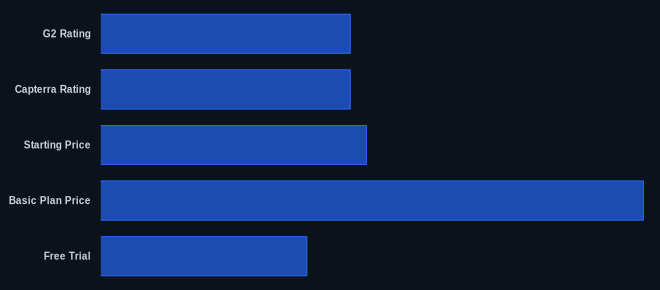
| G2 Rating | 4.4/5 (4,500+ reviews) | G2 Reviews |
| Capterra Rating | 4.5/5 (6,500+ reviews) | Capterra Reviews |
| Starting Price | $5/month (Starter Plan) | Shopify Pricing |
| Basic Plan Price | $39/month | Shopify Pricing |
| Free Trial | 3 days | Shopify Pricing |
| Staff Accounts (Basic) | 2 | Shopify Pricing |
| Plus Plan Starts At | $2,300/month | Shopify Plus |
| Transaction Fee (Basic, 3rd party) | 2.0% | Shopify Pricing |
| AI Adoption (2026) | 72% | 2026 eComFuel Trends Report |
Our Take
We've seen countless merchants use this platform, and its strengths in getting a store online fast are undeniable. It truly excels at providing a reliable, scalable foundation for DTC brands. However, the 2026 eComFuel report finding "zero financial edge" from AI adoption should give every entrepreneur pause. While the platform pushes impressive AI features, the real-world impact on the bottom line isn't automatic. The ongoing struggle with escalating app costs and inconsistent customer support is a bigger threat to merchant loyalty than any AI feature can currently offset. You're buying convenience, but that convenience comes with a growing price tag, and you need to audit your app stack regularly to keep it from spiraling. Don't assume the latest AI tool will solve your profit problems; focus on solid business fundamentals first.
If you're already on Shopify, how much of your monthly bill is going to apps that you could realistically replace with manual processes or a plan upgrade?
FAQ
Is Shopify still worth the cost in 2026, especially with the price increases?
Yes, for many businesses, it remains a worthwhile investment due to its ease of use, scalability, and solid core e-commerce features. However, you must carefully budget for potential hidden costs like transaction fees (if not using Shopify Payments) and especially monthly app subscriptions, which can significantly inflate your total spend. Evaluate your specific needs; if you're a high-volume seller, BigCommerce or a self-hosted WooCommerce might offer better long-term value by eliminating transaction fees.
How do Shopify's AI features, like Sidekick, actually help my business make money?
Shopify's AI features aim to save you time and improve customer experience, which can indirectly lead to increased revenue by freeing you up for strategic tasks or improving conversion rates. For example, AI product descriptions speed up listing, and AI personalization can boost sales. But a 2026 report indicates that despite high adoption, these AI tools haven't yet translated into a direct financial edge for most users, with non-AI adopters actually seeing faster profit growth. This means you should approach AI integration as a tool for efficiency, not an automatic revenue generator, and continually measure its impact on your specific business.
I'm worried about the reported outages and support issues. How reliable is Shopify for a growing business?
Shopify generally boasts high reliability with over 99.9% uptime, but recent, albeit infrequent, outages (e.g., June 3, 2026, for over 2 hours) did cause significant disruption and reputational damage for affected stores. While downtime is rare, it's critical. For support, dedicated Plus accounts receive excellent service, but standard users often report slower responses and less technical depth, with increased reliance on AI chatbots. For a growing business, consider whether the trade-off of occasional outages and potentially frustrating support interactions is acceptable given the platform's overall ease of use and scalability benefits.