Agentforce Sales Review 2026: AI & Pricing Unpacked
Agentforce Sales, rebranded in February 2026 from Salesforce Sales Cloud, isn't just a new name; it's a strategic pivot towards autonomous AI agents for sales tasks. This shift makes it a critical evaluation for any entrepreneur, remote team, or SMB looking to future-proof their sales operations and handle the future of digital selling. This review explores whether this AI-driven future is worth the high cost and steep learning curve.
What Is Agentforce Sales?
Agentforce Sales is the evolution of Salesforce’s flagship sales platform, now fundamentally redesigned to put AI agents at the forefront of your sales cycle. The platform targets growth-focused businesses, from ambitious startups managing their first few dozen leads to sprawling enterprises with thousands of reps. It helps automate repetitive sales tasks, enhance lead qualification, and manage complex pipelines with intelligent assistance. The goal is to transform traditional sales teams into agent-assisted powerhouses, letting human sellers focus their valuable time on high-value interactions and strategic relationship building, rather than manual data entry or repetitive outreach.
Key Features
The shift to Agentforce Sales brings new capabilities and refocused priorities, heavily emphasizing artificial intelligence and automation across the board.
Autonomous AI Sales Agents
The heart of the rebrand and the defining feature of the new platform is its autonomous AI agents. The software now deploys AI agents capable of handling a significant portion of the sales process without direct human intervention. These agents manage inbound lead generation by sifting through inquiries and qualifying prospects based on predefined criteria. They take over nurturing campaigns, personalizing outreach and follow-ups, and even manage aspects of sales administration and initial engagement. This is a significant shift, taking over many time-consuming tasks human reps once performed, freeing them to focus on closing deals and building rapport.
Enhanced Einstein Copilot & Intelligence
Einstein Copilot capabilities are dramatically amplified, offering real-time insights during calls or meetings by analyzing conversations and suggesting next steps. Predictive Deal Scoring 2.0 helps identify high-probability deals and potential risks early, allowing reps to prioritize effectively and allocate resources where they matter most. Generative Deal Summaries automate meeting recaps and follow-up emails, saving valuable administrative time after every client interaction. Einstein Pipeline Analyser gives you a clear, AI-driven view of your sales funnel, pinpointing bottlenecks and opportunities for improvement. The tool can also generate AI-powered email and content drafts, ensuring consistent messaging and brand voice. As of January 2026, Einstein Conversation Insights now stores data natively on the platform for all new customers, improving data security and integration.
Unmatched Customizability & Solid Reporting
Scott from Nerds Xpress pointed out, "HIGHLY customizable. All data fields can be pulled into reporting/dashboards. The beauty is that you are not at all limited to the out-of-the-box configuration (which is good, but generic)." You can tailor nearly every aspect of the software to fit your specific sales processes, no matter how unique your organization's needs are. This means building complex workflows, custom objects, and unique fields perfectly aligned with your business logic. The reporting and dashboard capabilities are equally powerful, letting you track almost any metric imaginable and turning raw data into actionable insights for strategic decision-making.
Extensive Integration Ecosystem
The AppExchange boasts over 7,000 apps, meaning it’s rare you’ll find a business tool that doesn't integrate with the platform. This massive ecosystem lets you connect your CRM to marketing automation, customer service, ERP systems, and more, creating a truly unified business environment where data flows freely. Deeper Slack AI and Salesforce Data 360 integrations are also notable, enhancing team collaboration and providing a more holistic view of customer data across all touchpoints. For example, your sales team can get instant updates from marketing campaigns or service tickets directly within their sales workflow without switching applications.
Strategic Acquisitions Bolstering Core Capabilities
Recent acquisitions are not just about market share; they're strategically integrated to accelerate the Agentforce Sales vision. Fin ($3.6B, June 2026) likely enhances conversational AI and intelligent automation for more sophisticated customer interactions. Momentum (March 2026) and Cimulate (March 2026) further strengthen the platform's AI and data processing capabilities, especially around predicting customer behavior and automating complex tasks. The acquisition of Informatica ($8.0B, May 2025) significantly boosts data management and integration across diverse systems, ensuring data quality and accessibility. These moves show a clear commitment to an AI-first future, rather than just growing the product line. Notably, older features like Lightning Sync are being retired (migrating to Einstein Activity Capture by August 2026), as is Salesforce for Outlook (December 2027), signaling a move towards more modern, integrated tools. The end of sale for Sales Dialer also indicates a shift towards newer communication methods.
Pricing
Agentforce Sales offers a range of pricing tiers, but don't be fooled by the initial numbers; this gets expensive fast. As of July 2026, per the official pricing page:
- Free Suite: $0/user/month (as of July 2026, per the official pricing page), capped at 2 users. This is a basic entry point, primarily for micro-businesses or individuals testing fundamental CRM capabilities without financial commitment.
- Starter Suite: $25/user/month (as of July 2026, per the official pricing page). Offers fundamental CRM features, suitable for small teams needing basic lead and account management.
- Pro Suite: $100/user/month (billed annually, as of July 2026, per the official pricing page). This is where many SMBs begin to unlock more features, but often requires a $25 Web Services API add-on for critical integrations, adding to the monthly cost.
- Enterprise: $175/user/month (billed annually, as of July 2026, per the official pricing page). Aimed at larger organizations needing advanced features, extensive customization, and more solid workflow automation. This tier, along with Unlimited, saw an average 6% price increase in August 2025.
- Unlimited: $350/user/month (billed annually, as of July 2026, per the official pricing page). Offers maximum features, premium support, and the highest level of customizability for complex sales environments that demand comprehensive tools.
- Agentforce 1 Sales: $550/user/month (billed annually, as of July 2026, per the official pricing page). This is the premium offering, bundling the most advanced AI and autonomous agent features, tailored for leading-edge sales organizations leveraging AI at scale for competitive advantage.
And then there are the hidden costs, which are substantial. Many businesses underestimate their total costs by a shocking 40-80%, often leading to significant budget overruns and unexpected expenditures down the line.
Implementation alone can range from $10,000 to over $500,000 (as of July 2026, per the official pricing page) for complex enterprise deployments requiring extensive customization, data migration, and third-party consultant expertise. If you opt for the Premier Success Plan, expect to pay 30% of your net license fees (as of July 2026, per the official pricing page), especially for Enterprise users, for improved support and faster issue resolution. Additional data storage beyond included limits quickly adds up, particularly for data-intensive operations storing vast customer histories or media files. Specific AI features, like Revenue Intelligence, can cost an extra $220/user/month (as of July 2026, per the official pricing page) per user, dramatically increasing overall spend for enhanced analytics. Managed services, often necessary for larger deployments to handle ongoing administration, optimization, and security, can run anywhere from $15,000-$80,000/year (as of July 2026, per the official pricing page). This all means you need a robust budget beyond just the listed per-user fees to truly use the platform.
Pros and Cons
Pros:
- Unmatched Customizability: You can bend this platform to fit almost any sales process, no matter how unique or complex your organization. Scott from Nerds Xpress praised how "All data fields can be pulled into reporting/dashboards. The beauty is that you are not at all limited to the out-of-the-box configuration." This allows for a truly tailored CRM experience that adapts to your specific needs.
- Powerful AI-Driven Sales Automation: The shift to autonomous AI agents for lead generation, qualification, and nurturing is genuinely forward-thinking. Einstein Copilot, Predictive Deal Scoring 2.0, and Generative Deal Summaries give your reps serious leverage, automating tedious tasks and providing intelligent guidance to close deals faster.
- Solid Reporting and Pipeline Management: Nate Wilson noted the "deep functionality" in the UI. The reporting tools are incredibly powerful, allowing you to slice and dice your sales data in countless ways, providing deep, actionable insights into your pipeline health, individual performance, and market trends.
- Vast Integration Ecosystem: With thousands of apps on the AppExchange, it integrates with virtually every other business tool you use. This makes it a central hub for your entire operational stack, from marketing automation to customer service platforms, ensuring a connected and efficient workflow.
- Exceptional Scalability for Growth: The software scales from small teams to global enterprises. It will grow with you, no matter how large or complex your sales operation becomes, handling increasing data volumes and user loads without requiring a platform switch.
Cons:
- Steep Learning Curve: Elena Perez admitted, "Salesforce has a steep learning curve. I've been using it for a couple of years, and I know that I still have barely scratched the surface of what I could be able to do." This isn't a tool you pick up in an afternoon; expect significant time, effort, and financial investment in training your team to master its capabilities.
- High Total Cost of Ownership: The license fees are high, but the hidden costs for implementation, add-ons, and premium support inflate your budget dramatically. Businesses often underestimate the true cost by a shocking 40-80%, leading to unexpected expenditures and financial strain.
- Mixed Customer Service Quality: While Premier Success Plan users often report good support, standard users frequently complain about slow response times and poor service quality. The Help Portal failing during a widespread outage, as it did in January 2026, is a particularly worrying sign for basic support reliability for critical issues.
- Service Reliability Concerns: The platform has experienced several service disruptions in the last 12 months, including login issues in the USA East Region (May 2026) due to resource exhaustion and a 5-day Data Cloud CRM Connector disruption (May 2026) due to infrastructure capacity. An 'intentional outage' in January 2026 due to a faulty database script accidentally breaking permission settings is particularly unsettling, highlighting potential vulnerabilities.
- Complexity Can Hinder Adoption: Despite its power, persistent challenges with data quality and user adoption remain. If your team isn't fully bought in and adequately trained, you’ll struggle to realize its full potential, potentially leading to wasted investment and frustrated users.
Who Should Use Agentforce Sales?
This platform is for businesses ready to embrace an AI-first sales strategy and invest heavily in their CRM infrastructure. It’s an ideal fit for:
- Enterprise Sales Teams: Especially those with complex, multi-stage sales processes that require deep customization, advanced workflow automation, and solid reporting. The platform's ability to handle intricate data models makes it perfect for large, diverse organizations with unique requirements.
- Growth-Focused SMBs with IT Resources: If you have dedicated internal IT or development teams, or a healthy budget for external consultants, you can truly use the software's power. It's not a plug-and-play solution, but its potential payoff for sophisticated operations is immense.
- Businesses Prioritizing AI Automation: Companies looking to offload inbound lead qualification, nurturing, and other repetitive tasks to autonomous AI agents will find its new direction compelling. It helps scale efforts without linearly scaling headcount, optimizing efficiency.
- Organizations with Extensive Integration Needs: If your business relies on a vast ecosystem of interconnected tools, the AppExchange makes the software a perfect central nervous system, ensuring data flows across departments and enhancing overall operational visibility.
- Companies Seeking Maximum Scalability: If you foresee rapid growth, expansion into new territories, or a dramatic increase in your customer base, the software can handle increasing complexity and user loads without requiring a platform switch, offering a future-proof solution.
It’s probably not for small teams seeking a simple, out-of-the-box solution with minimal overhead. For those, a platform like HubSpot Sales Hub or Zoho CRM might offer a more predictable, easier-to-manage experience, with a lower barrier to entry and more transparent pricing. Microsoft Dynamics 365 Sales, while also enterprise-grade, often makes more sense for businesses deeply embedded in the Microsoft ecosystem, offering bundled value.
Data at a Glance
| Metric | Value | Source |
|---|---|---|
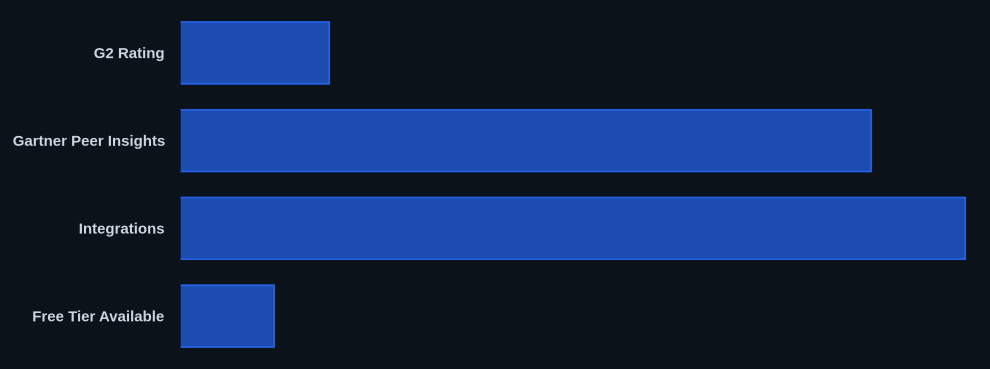
| G2 Rating | 4.4/5 stars (based on 25,415 reviews) | G2 Reviews for Salesforce Sales Cloud |
| Gartner Peer Insights | 2,473 reviews | Salesforce Official Site |
| Starting Price (Free Tier) | $0/user/month (as of July 2026) | Salesforce Agentforce Sales Pricing |
| Integrations | 7,000+ AppExchange apps | Salesforce AppExchange |
| Free Tier Available | Yes (capped at 2 users) | Salesforce Agentforce Sales Pricing |
| Enterprise Price (Annual) | $175/user/month (billed annually, as of July 2026) | Salesforce Agentforce Sales Pricing |
| Underestimated Costs | 40-80% of license fees (est) | Salesforce Official Site |
Our Take
The rebrand to Agentforce Sales and the aggressive pivot to autonomous AI agents are smart moves for Salesforce, even if it means alienating some traditional users. The platform is clearly doubling down on being the most sophisticated, AI-driven sales solution available, asserting its position at the cutting edge. Agentforce Sales holds a G2 rating of 4.4/5 stars based on 25,415 reviews and was recognized as G2's #1 Best Software Product in 2025. This indicates a high level of user satisfaction despite its complexity. Yes, it's pricey, and the hidden costs are substantial, but if you're a large enterprise or a rapidly scaling SMB with the budget and technical expertise, the sheer power and customization capabilities, now supercharged with AI, make it an unmatched investment. You're buying into a future where much of the grunt work of sales is handled by intelligent agents, letting your human team focus on closing deals and high-value strategic interactions that truly drive revenue.
If your team struggles with user adoption and training even with a powerful CRM, how will you ensure your investment in Agentforce's AI capabilities pays off?
FAQ
How much does Agentforce Sales really cost beyond the listed price?
The listed prices are just the starting point. Expect significant hidden costs, including implementation fees ranging from $10,000 to over $500,000 (as of July 2026, per the official pricing page), plus additional data storage if your needs exceed standard allocations. Specific AI features like Revenue Intelligence cost an extra $220/user/month (as of July 2026, per the official pricing page) for each user. Many businesses find their total spend is 40-80% higher than the license fees suggest, so budget for significant overhead beyond the base subscription.
What’s the biggest challenge in adopting Agentforce Sales for a new team?
The biggest challenge is undoubtedly the steep learning curve and inherent complexity of the platform. As Elena Perez noted, users "still have barely scratched the surface" even after years of use. Training your team requires a substantial, ongoing investment of time and resources to ensure they can effectively use the platform, its advanced features, and especially the new AI agents, to their full potential, often requiring dedicated administrators or external consultants.
Is the customer support for Agentforce Sales adequate for SMBs?
Customer support quality is mixed, and often depends heavily on your subscription tier. While larger enterprises with a Premier Success Plan (which adds 30% to license fees, as of July 2026, per the official pricing page) generally report good support, SMBs on lower tiers frequently complain about slow response times and poor service quality. This is a common point of frustration for smaller businesses, who might struggle to get timely assistance without paying for premium plans or having dedicated in-house expertise.