Salesforce Sales Cloud, now known as Agentforce Sales, offers unparalleled customization and is G2's #1 Best Software Product in 2025, but its true cost often escalates beyond the initial $25/user/month for the Starter Suite, making it a challenging choice for many. This tool is best for large organizations with mature sales processes, dedicated administrators, and deep pockets, prepared to fully embrace AI-driven sales.
What Is Agentforce Sales?
Agentforce Sales is the premier cloud-based customer relationship management (CRM) solution. It helps you manage sales pipelines, automate workflows, and get deep insights into customer interactions. Sales teams can track leads, opportunities, and accounts from initial contact through deal close and beyond. While it’s always been known for its customization capabilities and extensive ecosystem, the recent rebranding and focus on AI-driven autonomous agents underscore its ambition to redefine enterprise sales operations.
The platform serves as the central nervous system for sales operations. It provides a unified view of customer data and helps collaboration across departments. This tool grows with your business, offering immense scalability whether you have hundreds or thousands of sales reps. For businesses needing to orchestrate intricate sales cycles, manage vast territories, or integrate with a myriad of other business applications, Agentforce Sales has traditionally been the default choice.
Key Features
Agentforce Sales' capabilities are extensive, particularly after the recent integration of its AI suite. It goes far beyond basic contact management, aiming to provide an intelligent sales co-pilot.
Autonomous AI Agents (Agentforce AI)
The core of the recent rebrand, Agentforce AI introduces autonomous agents designed to assist with various sales tasks. These agents handle prospecting and outreach, intelligently identify and qualify contacts, and even help with pipeline management and deal acceleration. You get features like conversation analysis and summaries (integrating with Einstein Conversation Insights) and granular control over autonomous updates. Salesforce is also pushing Agentforce for Gemini, a beta integration for enhanced AI capabilities, which rolled out on April 22, 2026. This is where the platform aims to be truly impactful, letting AI take on routine, data-intensive tasks.
Core Sales Automation
Beneath the AI layer, the platform retains its solid sales automation capabilities. This includes lead and opportunity management, allowing teams to meticulously track prospects through every stage of the sales funnel. Features like sales flows and lead routing ensure that leads are assigned efficiently and processes are followed consistently. The software supports complex quoting and forecasting, providing sales leaders with clear visibility into future revenue and team performance.
Deep Customization and Flexibility
Salesforce is unmatched in its ability to be tailored to specific business needs. The Flow Builder allows for drag-and-drop automation of complex business processes, while Apex provides developers with a powerful language for custom code. Organizations can customize everything from record layouts and fields to entire sales processes and reporting dashboards. This flexibility means the platform can adapt to virtually any sales methodology or industry-specific requirement. It’s what keeps many large enterprises locked into the ecosystem, despite the cost.
Enterprise Reporting and Analytics
For sales leaders, the platform offers powerful reports and dashboards that provide real-time insights into sales performance, pipeline health, and individual rep productivity. Einstein Deal Insights brings predictive analytics into the mix, helping to identify deals at risk or opportunities that need more attention. Recent enhancements like Enhanced Pipeline Inspection (Spring/Summer '26), with a "Contacts" column and "Activity" heatmap, offer better deal visibility and deeper insights into customer engagement. This level of granularity is crucial for enterprise sales operations.
Extensive Ecosystem and Integrations
The AppExchange is a cornerstone of the Salesforce experience, boasting between 7,000 and 9,000+ apps. This vast marketplace lets businesses extend the platform's functionality for everything from advanced reporting and deduplication to document management and e-signatures. Beyond the AppExchange, the software offers native integrations with key tools. Recent updates include Sales Engagement Native to Salesforce Platform (March 2026) and a deeper integration with Salesforce Data Cloud for unified customer profiles, ensuring real-time data for its AI agents. The platform's ecosystem means you can build a truly bespoke sales tech stack.
Collaboration and Productivity Tools
Collaboration features are integral, with Slack Integration becoming increasingly central. By Summer '26, Slack channels are set to replace Chatter as the default collaboration tool. The platform also offers AI email sync and dynamic email marketing tools to speed up communication. For administrators, Salesforce Setup with Agentforce (Summer '26) promises AI-powered assistance, aiming to simplify the often-complex setup and maintenance tasks. It’s all designed to make sales teams more efficient, from top to bottom.
Pricing
Salesforce Sales Cloud, now operating under the Agentforce Sales moniker, provides various pricing tiers, typically billed annually per user per month. The Starter Suite is the only plan offering a monthly billing option, albeit at a premium. Actual customer costs can fluctuate wildly due to negotiations, add-ons, and implementation complexity. Here’s a breakdown of the standard plans (as of June 2026, per the official pricing page):
- Free Suite: $0/user/month. This entry-level option is limited to 2 users, making it suitable for very small startups or individuals learning the platform. It includes basic lead, account, contact, and opportunity management, along with Slack integration and basic email marketing. Crucially, it lacks automation and API access, which are essential for growing businesses.
- Starter Suite: $25/user/month. Positioned as an all-in-one CRM for small businesses, this tier offers unlimited users and includes core sales, marketing, and service functionalities. It adds sales flows, lead routing, AI email sync, and dynamic email marketing. Monthly billing is available at a 20-30% premium, making it a more flexible option for those hesitant about annual commitments.
- Pro Suite: $100/user/month. Building on the Starter Suite, this plan gives you significant customization capabilities, advanced automation, quoting, forecasting, and full access to the AppExchange. This is often the starting point for growing SMBs that need more control over their sales process.
- Enterprise: $175/user/month. This tier delivers advanced pipeline management, deeper deal insights, and includes Agentforce as an add-on, meaning the full AI suite isn't native to this plan. It's designed for larger, more complex sales organizations.
- Unlimited: $350/user/month. For organizations demanding the most from their CRM, this plan includes all Enterprise features, Premier Success support, multiple sandbox environments for development and testing, and full API access. This is where scalability truly shines.
- Agentforce 1 Sales: $550/user/month. The top-tier offering, this plan includes all Unlimited features plus unmetered Agentforce AI (the full autonomous suite), Salesforce Spiff (commissions management), Sales Planning, Sales Programs, Salesforce Maps, Tableau Next, and Slack Enterprise+. This is the plan where Salesforce's vision of an AI-driven sales future truly comes to fruition, but it comes with a hefty price tag.
Pricing Changes in the Last 12 Months: Salesforce increased list prices for its Enterprise and Unlimited Editions across several clouds, including Sales Cloud, by an average of 6% starting August 1, 2025. This impacts renewals throughout 2025 and 2026, meaning many businesses are facing higher costs simply to maintain their existing functionality.
Hidden Costs and Add-ons: This gets expensive fast, and the list price is just the beginning.
- Add-on Modules: Essential features like Sales Engagement (approx. $75/user as of June 2026, per the official pricing page) and Conversation Intelligence (approx. $50/user as of June 2026, per the official pricing page) are often additional purchases. Dialers are also separate, especially with the Sales Dialer End-of-Sale (Spring '26) pushing users to third-party telephony.
- Implementation Costs: These are almost universally underestimated. Projects can range from $10,000 to over $500,000, with many businesses underestimating by 40-80%. Getting the platform configured correctly, especially for complex sales processes, requires significant investment.
- Admin Salaries: To truly use the platform's power, you'll need dedicated administrators, who typically cost $80,000 to $120,000 annually. Without them, the software can quickly become a tangled mess of unused features and inefficient workflows.
- AppExchange Add-Ons: For advanced reporting, solid deduplication, document management, or e-signature capabilities, you’ll often need to purchase paid apps from the AppExchange, further increasing the total cost of ownership.
- Agentforce AI: While some plans include "Agentforce" as an add-on, the full autonomous AI suite (Agentforce 1 Sales) is either a premium tier or a costly add-on. Also, be aware of Flex Credits for certain services, which expire if unused.
Discount Strategies: There are ways to mitigate the cost. You might find 15-25% discounts for multi-year contracts, especially if you’re committing for 25+ users. Non-profit and educational organizations are often eligible for up to 10 free licenses. Negotiating at Salesforce’s fiscal quarter ends (March, June, September, December) can also yield better pricing, as can bundling multiple products together.
Pros and Cons
Choosing a CRM like Agentforce Sales is a significant decision. Here’s an honest look at its strengths and weaknesses in 2026.
Pros
- Unmatched Customization and Flexibility: This is the platform’s superpower. According to a Gartner Peer Insights reviewer: "A very powerful CRM platform that can handle complex sales processes with lots of customization as business needs change." It truly can be molded to almost any sales process, no matter how unique or intricate.
- Industry-Leading Pipeline Management and Reporting: For enterprise-level sales, visibility is everything. The software excels here with solid capabilities for pipeline management, opportunity tracking, forecasting, and deep, enterprise-grade analytics. You get a clear picture of your sales health.
- Extensive Ecosystem and Integrations: The AppExchange is a massive advantage. With thousands of apps, you can extend functionality in almost any direction, from advanced document generation to industry-specific tools. It integrates natively with countless other business applications, too.
- Scalability for Large Enterprises: Designed from the ground up for growth, it can handle unlimited users, multi-region operations, and massive data volumes. It’s built for businesses that expect to expand globally.
- Advanced AI Capabilities (Agentforce): The aggressive push into autonomous AI agents means you get access to new tools for prospecting, deal acceleration, and conversation analysis. For forward-thinking enterprises, this offers a glimpse into the future of sales.
Cons
- High Cost and Hidden Fees: This is the most consistent complaint. Users frequently cite high subscription prices, costly add-ons (Sales Engagement, Conversation Intelligence), substantial implementation costs (often underestimated by 40-80%), and the necessity of dedicated administrators.
- Steep Learning Curve and Complexity: The platform is incredibly powerful, but that power comes at a cost. A Gartner Peer Insights reviewer notes: "Salesforce has a steep learning curve. I've been using it for a couple of years, and I know that I still have barely scratched the surface of what I could be able to do." For new users or smaller teams without dedicated admins, it can be overwhelming and difficult to manage.
- Perceived "Headless" Ecosystem: With rapid changes, constant rebranding (like Sales Cloud to Agentforce Sales), unclear pricing for AI features, and frequent new tools, many Salesforce professionals feel lost. A SalesforceBen.com article from 2026 highlights this, indicating difficulty in confidently suggesting solutions to clients. There’s a disconnect between the AI vision and foundational user needs.
- Not Ideal for Outbound Prospecting/SDR Teams Out-of-the-Box: While it manages opportunities brilliantly, the platform often requires additional tools for direct outbound prospecting activities and integrated dialers, especially since the native Sales Dialer is being phased out (Spring '26). HubSpot Sales Hub often does better here for SMBs.
- Customer Support Quality Concerns: According to a Sciencesoft.com analysis: "Poor customer support provided by Salesforce is one of the crucial problems according to users' opinions, and the reasons are clear: in many situations, fast support is vital because long-awaited answers can cost big money." Recent outages, including the Help Portal itself going down in January 2026, exacerbate this issue, leaving customers feeling unsupported during critical times.
- Reliability and Downtime Issues: Several incidents in early 2026, including performance degradation affecting Core Services (January 27, 2026) and a cross-cloud service disruption lasting nearly four weeks (March 1-27, 2026), reveal vulnerabilities. These outages, often linked to "storage and system resource exhaustion" or "unprecedented scale," can significantly disrupt operations for businesses relying on the platform.
Who Should Use Agentforce Sales?
Agentforce Sales is undeniably a powerhouse, but it's not for everyone.
It's primarily for large enterprises and complex organizations with intricate sales processes, multi-layered hierarchies, and a global footprint. If your business operates across multiple regions, manages thousands of customers, and requires highly specialized workflows, the platform's customization capabilities are unparalleled. You'll likely have a dedicated team of Salesforce administrators, developers, and consultants.
The software also suits businesses committed to an AI-first sales strategy. If you’re eager to experiment with autonomous AI agents for prospecting, pipeline management, and deal acceleration, and have the budget to invest in the Agentforce 1 Sales tier, this platform is for you. It’s for companies ready to innovate at the bleeding edge of sales technology.
However, if you're a small to medium-sized business (SMB) with a simpler sales process, a tight budget, or no dedicated CRM administrator, you should proceed with caution. The Starter Suite exists, but the platform's complexity and hidden costs can quickly become overwhelming. Alternatives like HubSpot Sales Hub or Zoho CRM often provide better out-of-the-box value and a gentler learning curve for teams focusing on core sales tasks without needing to develop custom solutions.
Data at a Glance
| Metric | Value | Source |
|---|---|---|
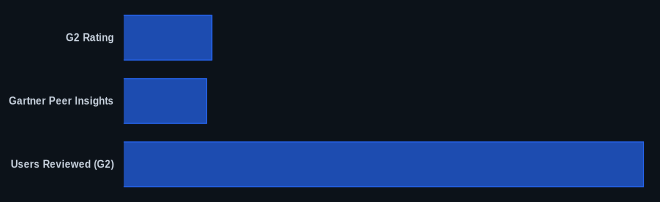
| G2 Rating | 4.4/5 stars | G2.com |
| Gartner Peer Insights | 4.3/5 stars | Gartner.com |
| Starting Price (Free) | $0/user/month (as of June 2026, per the official pricing page) | Salesforce Official Pricing |
| Integrations (AppExchange) | 7,000-9,000+ apps | Salesforce AppExchange |
| Users Reviewed (G2) | 25,415+ | G2.com |
Our Take
We've observed a palpable tension within the Salesforce ecosystem. While the aggressive push for "Agentforce Sales" and autonomous AI agents at Dreamforce 2025 painted a bold vision, the reality for many customers is a feeling of being 'headless.' The platform's undeniable power and customization are often overshadowed by its soaring costs, steep learning curve, and a recent string of frustrating outages. It feels like Salesforce is racing ahead with cutting-edge AI, while a significant portion of its customer base is still grappling with foundational CRM problems—like getting reliable support or understanding their true total cost of ownership. Yes, it’s still the gold standard for enterprise scalability and customization, but you need an internal SWAT team and a massive budget to truly harness its power and navigate its complexities in 2026. For those less prepared, the innovation might feel more like noise than a solution.
If you're considering Agentforce Sales for an SMB, how do you plan to account for the hidden implementation and administration costs beyond the listed subscription fees?
FAQ
What is the primary difference between Salesforce Sales Cloud and Agentforce Sales?
Salesforce Sales Cloud officially rebranded to Agentforce Sales as of Dreamforce 2025. The core platform remains, but the rebrand signifies a strong strategic shift towards deeply embedding autonomous AI agents into every aspect of the sales process, aiming to provide a more intelligent and proactive selling experience. The name change reflects this emphasis on AI-driven capabilities.
How much does Salesforce Agentforce Sales truly cost for a growing SMB?
While the Starter Suite begins at $25/user/month (as of June 2026, per the official pricing page), a growing SMB will likely find the true cost quickly escalates. You'll probably need the Pro Suite (starting at $100/user/month as of June 2026, per the official pricing page) for essential customization and AppExchange access. Then factor in crucial add-ons like Sales Engagement (approx. $75/user as of June 2026, per the official pricing page), implementation costs (often $10,000+), and potentially a dedicated part-time or full-time administrator (starting around $80,000 annually). This gets expensive fast; expect to pay significantly more than just the base subscription.
Does Agentforce Sales have a good track record of reliability and customer support?
In 2026, the platform has faced notable reliability challenges, including multiple cross-cloud service disruptions and performance degradation incidents. Customer support quality is a frequent user complaint, with many reporting slow response times and difficulty getting resolution for complex issues, even experiencing outages with the Help Portal itself in January 2026. While Premier Success offers better support, it’s part of the higher-tier plans.