Zoho CRM consistently offers comparable enterprise-level features at a significantly lower and more predictable price point than Salesforce Sales Cloud, making it a strong contender for SMBs and those seeking substantial cost savings in 2026. A 100-user Zoho CRM Enterprise deployment runs about $48,000/year (as of January 2026, per the official pricing page) versus roughly $210,000/year (as of January 2026, per the official pricing page) for Salesforce Enterprise, before add-ons. This comparison is for entrepreneurs, remote teams, and small to mid-sized businesses (SMBs) who need to make an informed software buying decision, weighing advanced capabilities against budget and complexity.
TL;DR: Salesforce Sales Cloud vs. Zoho CRM
| Feature | Salesforce Sales Cloud | Zoho CRM |
|---|---|---|
| Best For | Large enterprises, complex multi-cloud environments, highly regulated industries, deep customization | SMBs, budget-conscious teams, rapid deployment, integrated Zoho ecosystem |
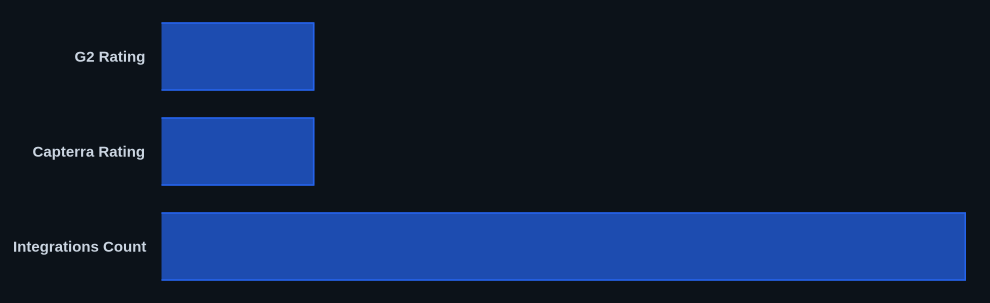
| G2 Rating | 4.4/5 stars (24,000+ reviews) Source | 4.1/5 stars Source |
| Capterra Rating | 4.4/5 stars (1,227 reviews for Sales Cloud) Source | 4.4/5 stars (7,006 reviews) Source |
| Free Tier | Free Suite (2 users) (as of January 2026, per the official pricing page) | Free (up to 3 users) (as of January 2026, per the official pricing page) |
| Starting Price | $25/user/month (Starter Suite, billed annually) (as of January 2026, per the official pricing page) Source | ~$14/user/month (Standard, billed annually) (as of January 2026, per the official pricing page) Source |
| AI Capabilities | Einstein AI, Agentforce, predictive AI, conversation intelligence | Zia AI, predictive analytics |
| Integrations | 7,000+ on AppExchange, vast third-party ecosystem | Strong within Zoho ecosystem, Zapier, Office 365, Slack, Zoom, Mailchimp |
| Customization | High ceiling, extensive for large corporations | High, effective for SMB to mid-market needs |
| Setup Time | Significant, often requires consultants | Faster, more intuitive |
| Cost Predictability | Lower, prone to add-ons and hidden costs | Higher, more transparent pricing |
What Is Salesforce Sales Cloud?
Salesforce Sales Cloud is a customer relationship management (CRM) platform designed primarily for sales teams to manage leads, opportunities, and customer accounts. It targets medium to large enterprises, offering a deep set of tools for every stage of the sales pipeline, from prospecting to closing deals and post-sale engagement. The platform focuses on maximizing sales efficiency through advanced analytics, automation, and a vast ecosystem of integrated applications.
The tool helps organizations centralize customer data, automate sales processes, and gain insights into their sales performance. It's built for companies with complex sales cycles, large sales teams, and those that require extensive customization to fit unique business processes. For many users, the platform provides a single source of truth for all sales-related activities, ensuring consistency and collaboration across departments.
What Is Zoho CRM?
Zoho CRM provides a user-friendly and feature-rich platform to manage sales, marketing, and customer support activities. It serves small to mid-sized businesses, as well as larger organizations seeking an affordable yet powerful CRM solution. The software helps teams organize leads, contacts, accounts, and deals, speed up communication, and automate routine tasks.
The platform is known for its value for money and its ability to integrate tightly with other Zoho products, forming a cohesive business suite. It simplifies customer relationship management by offering essential tools like sales pipeline management, reporting, and marketing automation in an accessible package. Businesses with tighter budgets and a need for straightforward implementation often find this tool an ideal fit.
Key Features
Both Salesforce Sales Cloud and Zoho CRM offer solid core CRM functionalities, but their unique strengths cater to different business needs and scales.
Shared Core Features
You'll find that both platforms provide the essentials for any modern sales team. They both handle lead management, allowing you to capture, nurture, and qualify prospects. Contact management is a given, centralizing all customer information, communication history, and interactions. Sales teams use either tool for sales pipeline management, tracking deals from initiation to closure.
Both offer solid reporting and analytics capabilities, giving insights into sales performance. You can expect workflow automation to speed up repetitive tasks, freeing up sales reps for more critical activities. Email integration and basic marketing automation are also standard, alongside functional mobile apps for on-the-go access and API access for custom integrations.
Salesforce Sales Cloud Unique Features
Salesforce pushes the boundaries with its advanced capabilities, especially in AI and its ecosystem. Einstein AI is deeply integrated, offering predictive analytics, sales forecasting, and personalized recommendations. Agentforce, available on higher tiers, provides even more specialized AI-driven sales assistance. Its AppExchange Marketplace is unparalleled, with over 7,000+ integrations and ready-to-install packages, allowing businesses to extend functionality almost infinitely.
The platform excels in multi-cloud consolidation, enabling unified operations across various Salesforce clouds (Service Cloud, Marketing Cloud, etc.). Large enterprises benefit from its enterprise-grade support and compliance features like Salesforce Shield, Event Monitoring, and field-level encryption. The underlying architecture supports highly complex organizational designs, including unique features like the OpportunityContactRole junction object and polymorphic activity fields, which cater to intricate data relationships.
Zoho CRM Unique Features
Zoho CRM focuses on usability, embedded intelligence, and a cohesive suite. Its Blueprint Process Management tool guides users through standardized sales processes, ensuring consistency. Zia AI provides intelligent assistance, predictive analytics, and conversational AI within the platform. The proprietary Deluge scripting language allows for powerful customization and automation without requiring deep coding expertise.
The tool includes Inventory Management natively, which is crucial for businesses that handle physical products. Canvas Design Studio lets you create highly customized, visually appealing CRM interfaces. For advanced workflow needs, Kiosk Studio and Journey Orchestration help map out and automate customer journeys. The CRM Plus bundle is a significant draw, offering nine integrated Zoho products for a holistic business solution.
Integration Ecosystems
The integration story is where these two tools diverge significantly. Salesforce's AppExchange has a historical advantage, offering an incredibly deep and broad marketplace of third-party integrations. If a specific business function exists, there's likely an AppExchange package for it, or it can be custom-integrated. This allows for immense flexibility and specialized tooling for almost any industry or use case.
Zoho CRM shines brightest within its own Zoho ecosystem. Its integrations with Zoho Analytics, Zoho Creator, Zoho Desk, and Zoho Campaigns are seamless and solid, often included in bundles like CRM Plus. For common third-party tools like Office 365, Slack, Zoom, Mailchimp, and Zapier, the platform offers integrations. However, some users report that non-Zoho third-party integrations can occasionally be more difficult or time-consuming to set up compared to the AppExchange experience, particularly for complex, custom workflows.
Pricing
Pricing is a critical differentiator, especially for SMBs evaluating long-term costs. It's important to remember that all listed prices are per user/month, billed annually. Monthly billing typically adds 20-40% to Zoho's costs.
Salesforce Sales Cloud Pricing 2026
As of January 2026, per the official Salesforce Sales Cloud pricing page:
- Free Suite: $0 for up to 2 users (as of January 2026, per the official pricing page). Includes basic lead and contact management.
- Starter Suite: $25 (as of January 2026, per the official pricing page). Offers essential CRM features like contact/lead management, email marketing, and basic workflow automation.
- Pro Suite: $100 (as of January 2026, per the official pricing page). Adds customization capabilities, advanced automation, quoting, and sales forecasting.
- Enterprise: $175 (as of January 2026, per the official pricing page). This plan includes web API access, advanced insights, conversation intelligence, and Agentforce access. This plan saw a 6% price increase as of August 2025.
- Unlimited: $350 (as of January 2026, per the official pricing page). Bundles predictive AI, enhanced Conversation Intelligence, Sales Engagement tools, a Premier Success Plan, and a Full Sandbox environment. This plan also saw a 6% price increase as of August 2025.
- Agentforce 1 Sales: $550 (as of January 2026, per the official pricing page). This top-tier option includes the most advanced AI and support.
Salesforce prices are just starting points. Add-ons, implementation costs (ranging from $10,000 to over $500,000 as of January 2026, per the official pricing page), and Premier Support (a 30% multiplier on top of the license cost, though bundled in Unlimited/Agentforce 1) significantly increase the total investment. This gets expensive fast.
Zoho CRM Pricing 2026
As of January 2026, per the official Zoho CRM pricing page:
- Free: $0 for up to 3 users (as of January 2026, per the official pricing page). Provides basic leads, contacts, accounts, tasks, and standard reports.
- Standard: ~$14 (as of January 2026, per the official pricing page). Adds mass emailing (250/day), multiple pipelines, custom dashboards, forecasting, and basic workflows.
- Professional: ~$23 (as of January 2026, per the official pricing page). Includes Blueprint process management, validation rules, inventory management, and webhook automation.
- Enterprise: ~$40 (as of January 2026, per the official pricing page). Introduces Zia AI, predictive analytics, custom modules, encryption at rest, advanced customization, and territory management. This is Zoho's most popular plan for mid-sized companies.
- Ultimate: ~$52 (as of January 2026, per the official pricing page). Includes advanced analytics (Zoho Analytics), higher feature limits, and extended AI capabilities.
- CRM Plus: ~$57 (as of January 2026, per the official pricing page). This bundle integrates nine different Zoho products, including SalesIQ, Desk, Campaigns, and Projects.
Reviewers consistently praise Zoho for its value, noting significant cost savings for businesses that switch from Salesforce. According to a direct comparison: "Zoho CRM's paid tiers start at $14/user/month (as of January 2026, per the official pricing page), Salesforce starts at $25/user/month (as of January 2026, per the official pricing page). A 100-user Zoho CRM Enterprise deployment runs about $48,000/year (as of January 2026, per the official pricing page) versus roughly $210,000/year (as of January 2026, per the official pricing page) for Salesforce Enterprise, before add-ons." This huge difference really hammers home the cost gap.
Pros and Cons
Choosing a CRM isn't just about features; it's about the entire experience, from setup to daily use.
Salesforce Sales Cloud Pros
- Unmatched Customization: The platform allows for extreme tailoring to fit the most complex business processes.
- Deep AppExchange Ecosystem: Thousands of integrations mean you can find a solution for almost any niche need.
- Powerful AI & Analytics: Einstein AI and Agentforce offer advanced insights and predictive capabilities for strategic selling.
- Scalability for Enterprises: Designed to handle vast data volumes, complex hierarchies, and multi-cloud governance for global corporations.
- Solid Reporting: Excellent for creating intricate reports and dashboards, including joined reports and cross-object formulas.
Salesforce Sales Cloud Cons
- High Cost: Prices escalate quickly with add-ons, implementation, and support, making it prohibitive for smaller budgets. It gets expensive fast.
- Steep Learning Curve: The platform's complexity can be overwhelming for new users and requires significant training.
- Demanding Setup & Administration: Requires dedicated administrators or consultants for effective setup and ongoing maintenance.
- Vendor Lock-in: Migrating away can be a significant challenge due to its deep integration and proprietary data structures.
- Price Increases: Historical 6% price increases on Enterprise and Unlimited plans signal ongoing cost escalation.
Zoho CRM Pros
- Exceptional Value for Money: Offers enterprise-level features at a fraction of Salesforce's cost.
- Ease of Use & Faster Adoption: Its intuitive design reduces training time and improves user adoption rates.
- Predictable Pricing: Fewer hidden costs and a clear tier structure make budgeting simpler.
- Strong Zoho Ecosystem Integration: Seamlessly works with other Zoho products for an all-in-one business suite.
- High Customizability (for its segment): Provides ample customization options for SMBs and mid-market companies.
Zoho CRM Cons
- Learning Curve for Advanced Features: While generally easy to use, mastering advanced automations and customizations can take time.
- Cluttered Interface (for some): Some users find the interface can feel overwhelming or cluttered, especially for less tech-savvy users.
- Integration Challenges with Non-Zoho Tools: While it integrates with many popular apps, some complex third-party integrations can be difficult.
- Limited Enterprise Ceiling: May not offer the same depth of architectural design or niche industry compliance as Salesforce for very large, complex corporations.
- Customer Support Perceptions: While generally good, some users report a less responsive or specialized support experience compared to Salesforce's Premier tiers.
Who Should Use Salesforce Sales Cloud?
Salesforce Sales Cloud is the definitive choice for large enterprises with vast sales teams, intricate organizational structures, and the budget to support it. If your business operates in highly regulated industries like financial services or healthcare, requiring specific compliance frameworks (e.g., Salesforce Shield, Event Monitoring), this is your platform. It's also ideal for companies needing extensive customization to match unique, complex workflows that no out-of-the-box solution can handle.
If your strategy relies heavily on advanced AI-driven insights (Einstein, Agentforce) or requires access to a vast third-party ecosystem via the AppExchange, it's a strong contender. Businesses focused on multi-cloud governance, unifying operations across sales, service, and marketing clouds, will find the platform's consolidation capabilities essential. Ultimately, if your business scale and complexity demand the highest ceiling for features, extensibility, and dedicated support, Salesforce Sales Cloud is built for you.
Who Should Use Zoho CRM?
Zoho CRM is perfectly suited for small to mid-sized businesses (SMBs) that operate with tighter budgets and want maximum value without sacrificing core features. It's an excellent option for teams with limited technical staff who need an easy-to-implement and administer CRM. The software excels in scenarios where a straightforward, affordable, and easy-to-use CRM is a priority, offering good automation and reporting capabilities right out of the box.
If your business benefits from a consolidated software ecosystem, the integration with other Zoho products (like Zoho Analytics, Desk, and Campaigns) is a significant advantage. It's a great fit for businesses that prioritize cost predictability and want to avoid the unexpected expenses often associated with enterprise software. For those needing a reliable solution for basic to standard sales complexity, focusing on lead, contact, and pipeline management with efficient automation, Zoho CRM delivers. According to a user comparison, "Zoho CRM's intuitive design reduces training time and improves user adoption rates, leading to better data quality and sales performance."
Data at a Glance
| Metric | Salesforce Sales Cloud | Zoho CRM | Source |
|---|---|---|---|
| G2 Rating | 4.4/5 stars (24,000+ reviews) | 4.1/5 stars (7,000+ reviews) | G2 Sales Cloud, G2 Zoho CRM |
| Capterra Rating | 4.4/5 stars (1,227 reviews for Sales Cloud) | 4.4/5 stars (7,006 reviews) | Capterra Sales Cloud, Capterra Zoho CRM |
| Starting Price | $25/user/month (Starter Suite, billed annually) (as of January 2026, per the official pricing page) | ~$14/user/month (Standard, billed annually) (as of January 2026, per the official pricing page) | Salesforce Pricing, Zoho CRM Pricing |
| Free Tier Users | 2 users (Free Suite) (as of January 2026, per the official pricing page) | 3 users (Free plan) (as of January 2026, per the official pricing page) | Salesforce Pricing, Zoho CRM Pricing |
| Integrations Count | 7,000+ via AppExchange | Extensive within Zoho ecosystem, Zapier, Office 365, Slack, Zoom, Mailchimp | Salesforce AppExchange, Zoho CRM Integrations |
| Enterprise Plan Cost (100 users/year) | Roughly $210,000/year (before add-ons, implementation, support) (as of January 2026, per the official pricing page) | Roughly $48,000/year (as of January 2026, per the official pricing page) | Salesforce Pricing, Zoho CRM Pricing |
| Price Increase (Aug 2025) | 6% on Enterprise & Unlimited plans (as of August 2025, per the official pricing page) | None reported | Salesforce Pricing |
| Typical Setup Time | Weeks to months, often requiring consultants | Days to weeks, depending on complexity | G2 Sales Cloud, G2 Zoho CRM |
Our Take
For the vast majority of SMBs, Zoho CRM offers a superior value proposition. While Salesforce undeniably has a higher ceiling for complex, bespoke enterprise solutions, that ceiling comes with a staggering price tag and operational overhead that most growing businesses simply don't need or can't afford. With Salesforce, you're not just buying software; you're buying into an entire ecosystem of consultants and add-ons. Zoho, on the other hand, delivers solid functionality—including AI and process automation—at price points that feel grounded in reality. Yes, Salesforce's AppExchange is deeper, but Zoho’s native integrations and its Deluge scripting cover most common business needs effectively. Unless you're a multi-billion dollar enterprise with a dedicated team of CRM architects, the cost savings and faster time-to-value with Zoho are simply too compelling to ignore.
Are you an SMB currently using Salesforce and struggling with the cost of add-ons, or do you find your team only uses 20% of its vast features?
Migration Considerations
Switching CRMs is never trivial. It's a significant undertaking that impacts sales processes, data integrity, and team productivity.
Switching from Salesforce to Zoho CRM
Businesses often move from Salesforce to Zoho CRM primarily for cost-effectiveness, reporting 40-60% savings (as of January 2026, per research data). Another major driver is the desire for a more user-friendly interface and easier user adoption, reducing the need for extensive training. Teams also seek simplified administration, often reducing reliance on dedicated Salesforce admins or expensive consultants. The features are perceived as better scaled to the needs of SMBs, providing essential capabilities without overwhelming complexity. Finally, the opportunity for consolidation within the Zoho ecosystem (using Zoho Books, Desk, Campaigns, etc.) attracts companies looking for an all-in-one platform.
The data migration from Salesforce to Zoho CRM is a custom setup. It involves carefully extracting records, mapping custom fields and objects, and rebuilding workflows, roles, and reports in Zoho. Data mapping is crucial, especially considering Zoho's limits (e.g., 300 fields per module, 5 lookup fields). Zoho does offer tools that can automatically read files, map data, and even create new modules, which helps. Still, thorough post-migration validation is crucial to ensure data integrity.
Switching from Zoho CRM to Salesforce
Conversely, some businesses choose to switch from Zoho CRM to Salesforce when they hit a wall with its capabilities. The primary reasons include needing deeper customization and flexibility to handle highly complex or niche business processes. Access to the vast AppExchange Marketplace ecosystem for specialized integrations that Zoho might not offer is another strong pull. Enterprises might outgrow the platform, requiring the enterprise-grade capabilities and scalability that Salesforce provides for vast user bases and multi-cloud environments. The need for advanced AI and automation (Einstein AI), coupled with more sophisticated reporting depth (joined reports, cross-object formulas, native BI tools), can also drive the switch. Finally, large organizations looking for multi-cloud consolidation and governance often turn to Salesforce.
Migrating from Zoho CRM to Salesforce is considered a "data-model translation project." It requires extracting all data—leads, contacts, accounts, deals (opportunities), activities, notes, products, email history, and any custom modules—and loading it into Salesforce objects while preserving relationships. Challenges arise from object naming divergence (e.g., "Deals" in Zoho become "Opportunities" in Salesforce), differing field API names, and Salesforce's unique handling of extra deal contacts or activity polymorphism. This can take 2-6 weeks for a standard sales organization and 6-14 weeks for an enterprise (as of January 2026, per research data). It requires careful data mapping, process redesign, and a phased rollout, with data cleaning and deduplication highly recommended.
Hidden Switching Costs
Regardless of the direction, switching CRMs incurs significant hidden costs beyond just license fees. These include implementation costs (for consulting, customization, and data migration), workflow and automation rebuilding, integration reconfiguration with other business tools, and user adoption friction. The latter requires solid change management, new playbooks, and extensive training to ensure your team actually uses the new system effectively. There's also the risk of data cleanup and potential downtime or disruption during the transition, all of which impact your bottom line.
FAQ
Q: Which CRM is better for my startup on a tight budget?
A: For a startup with a tight budget, Zoho CRM is almost certainly the better choice. Its Free plan supports up to 3 users (as of January 2026, per the official pricing page), and its paid tiers start at an affordable ~$14/user/month for the Standard plan (as of January 2026, per the official pricing page). Salesforce's Free Suite supports only 2 users (as of January 2026, per the official pricing page), and its paid plans begin at $25/user/month (as of January 2026, per the official pricing page), with costs quickly escalating for add-ons. Zoho gives you more bang for your buck early on.
Q: We’re a growing mid-sized company; which platform offers the best balance of features and scalability without breaking the bank?
A: For a growing mid-sized company, Zoho CRM's Enterprise plan at ~$40/user/month (as of January 2026, per the official pricing page) offers an excellent balance. It introduces advanced features like Zia AI, predictive analytics, custom modules, and territory management that compare well to Salesforce's higher tiers but at a significantly lower cost. You get powerful automation, strong reporting, and solid customization without the high-end price tag and complexity often associated with Salesforce.
Q: Can Zoho CRM handle complex sales processes and advanced analytics like Salesforce?
A: While Salesforce Sales Cloud has a higher ceiling for extreme complexity and its Einstein AI offers deeper, industry-specific analytical models, Zoho CRM with its Enterprise and Ultimate plans, featuring Zia AI and Zoho Analytics integration, can handle many complex sales processes and provide predictive insights and advanced reporting. The key difference lies in the scale of complexity; Zoho is typically very effective for sophisticated mid-market needs, while Salesforce caters to the absolute largest and most intricate global enterprises.