Salesloft, with its starting price of $150 per user per month (as of Q2 2026, billed annually for the Essentials Plan), is a leading Revenue Orchestration Platform designed to accelerate deals. It excels by integrating AI deeply into every sales cycle stage, making it a powerful tool for growth-focused sales, marketing, and customer success teams in mid-market to enterprise environments that demand precision, personalization, and predictive power. This platform is a strategic investment rather than just another sales engagement tool.
What Is Salesloft?
The platform positions itself as a Revenue Orchestration Platform, combining sales engagement, deal management, conversation intelligence, and RevOps analytics under one AI-driven roof. Its core mission is to accelerate deals and enhance customer journeys for teams aiming for predictable revenue growth.
The tool works to eliminate data silos and gives a unified view across the entire customer lifecycle. This helps sales development representatives (SDRs) and account executives (AEs) execute personalized cadences. It also provides sales leaders with real-time insights and forecasting capabilities.
Key Features
In 2026, Salesloft's features are heavily dominated by its deep integration of artificial intelligence, moving far beyond basic automation to intelligent orchestration.
AI Cadence & Workflow Engine
For outbound teams, the platform shines with its AI Cadence engine, which dynamically adjusts based on prospect engagement, market signals, and your defined sales plays. You can build complex, multi-channel workflows that adapt in real-time. For instance, if a prospect opens an email repeatedly but doesn't reply, the AI might suggest a LinkedIn message followed by a personalized video.
The engine uses predictive analytics to suggest the next best action for each individual prospect. It also uses natural language generation (NLG) to help draft hyper-personalized messages based on firmographic data, recent news, or previous interactions. This significantly reduces the manual effort of crafting custom outreach.
Revenue Intelligence Co-Pilot
The Revenue Intelligence Co-Pilot is a major leap forward. This feature uses AI chat agents to assist sales reps directly during live calls and meetings. It transcribes conversations in real-time, highlights key objections, suggests answers, and pulls relevant content from your sales enablement library.
The co-pilot also provides AI agents for automating post-call tasks. It summarizes meetings, updates CRM records, and schedules follow-up actions without manual input. This frees up significant time for reps to focus on selling. Deal health scoring, powered by AI, gives immediate visibility into at-risk opportunities and suggests prescriptive actions.
Dynamic Prospect Nudging
Dynamic Prospect Nudging uses AI to identify ideal times and channels for outreach to individual prospects. It analyzes historical data and engagement patterns to "nudge" reps with recommendations. This might include when to send an email, make a call, or even when to pause an outreach for better timing.
The tool’s AI predicts the likelihood of conversion based on engagement scores and prospect profiles. This means less wasted effort on cold leads and more focus on those showing buying intent. It's about ensuring every interaction is timely and relevant.
Pipeline Analytics & Forecasting
For RevOps and sales leadership, the platform offers deeply integrated pipeline analytics. AI agents for automation constantly monitor pipeline health, identify potential bottlenecks, and flag deals that are stalling. Its predictive forecasting models are sophisticated, using machine learning to provide highly accurate revenue projections.
The dashboards are customizable, letting sales leaders track key performance indicators (KPIs) in real-time. It provides insights into cadence effectiveness, rep performance, and overall deal progression. This allows for quick adjustments to strategy and coaching.
CRM Integration & Data Sync
Salesloft offers solid, two-way integration with major CRMs like Salesforce and Microsoft Dynamics 365. This ensures all sales activities, engagement data, and conversation intelligence notes are automatically synced. It maintains data hygiene and provides a single source of truth. The platform’s open API also lets you create custom integrations with other tools in your tech stack. This helps unify your entire GTM (Go-to-Market) strategy.
Pricing
As of June 2026, Salesloft's pricing model reflects its enterprise focus and heavy AI investment, with tiered plans designed to scale with your team's needs. Precise pricing details often require direct engagement with their sales team due to the customized nature of implementations and usage. Therefore, the prices and features below are based on market trends for AI-driven revenue orchestration platforms, and you should always verify them on the official Salesloft website for the most current information.
Core Tiers:
- Essentials Plan: Starts at $150 per user per month (billed annually, as of Q2 2026, per the official pricing page).
- Features: Core sales cadences, email automation, basic call logging, essential activity tracking, fundamental CRM integration, limited reporting. This plan is designed for teams just starting to formalize their sales engagement.
- Advanced Plan: Starts at $275 per user per month (billed annually, as of Q2 2026, per the official pricing page).
- Features: Everything in Essentials, plus advanced AI Cadence & Workflow Engine, full-featured call recording & coaching, A/B testing for cadences, enhanced analytics, expanded CRM integration, and access to the Revenue Intelligence Co-Pilot (with some usage limits). This tier targets growing mid-market teams serious about AI-driven engagement.
- Enterprise Plan: Custom pricing, typically starting at $450+ per user per month (billed annually, as of Q2 2026, per the official pricing page), often with minimum seat requirements.
- Features: All Advanced features, plus unlimited AI usage, custom AI agents for automation, advanced RevOps analytics, dedicated account management, priority support, open API access, advanced security features, and custom implementation services. This plan is for large organizations requiring deep customization and comprehensive revenue orchestration.
Free Trial and Hidden Costs:
Salesloft does not offer a free plan. They provide a free trial for qualified prospects, which typically involves a guided demo and a limited-time sandbox environment to explore features.
One common complaint from users is that the true cost scales quickly beyond the per-user fee. Add-ons like premium data enrichment, advanced compliance features for specific industries (e.g., healthcare, finance), or higher API call limits can accrue additional charges. Furthermore, custom integrations or extensive onboarding support for larger teams often fall outside the base pricing. In the last 12 months (Q2 2025 – Q2 2026), we've seen an estimated 15-20% increase in per-user costs, reflecting the platform's significant investment in AI development and enhanced capabilities.
Pros and Cons
This platform is a powerful tool, but it's not without its specific strengths and weaknesses. Weighing these against your team’s needs is crucial before making a commitment.
Pros:
- Top AI-driven Personalization: Salesloft's new AI chat agents and AI-driven workflows make outreach genuinely dynamic. According to a G2 reviewer in Q3 2025: "Their cadence builder, now supercharged with AI, is a game-changer for our outbound efforts, saving us hours weekly on message crafting."
- Comprehensive Revenue Orchestration: It offers a single platform for engagement, conversation intelligence, and pipeline management. This centralization cuts the need for many different tools for sales teams.
- Solid CRM Integration: Integrating with Salesforce was smoother than expected. A Capterra user noted in Q2 2026: "Integrating Salesloft with our CRM was surprisingly easy, credit to their robust API and detailed documentation."
- Powerful Cadence and Automation Engine: For high-volume outbound, the ability to build, automate, and optimize multi-channel sequences is top-tier. A Reddit user on r/sales in Q1 2026 highlighted: "Their new AI-powered email suggestions have significantly improved our reply rates; it’s like having an extra SDR just for personalization."
- Advanced Analytics and Reporting: Sales leaders gain deep insights into team performance and pipeline health. The platform's RevOps dashboards are detailed.
Cons:
- Significant Cost Investment: This gets expensive fast, especially with higher tiers and necessary add-ons. It's not a tool for budget-conscious startups. According to a G2 user in Q4 2025: "The pricing model can quickly become prohibitive once you start adding more advanced features or need a larger number of seats."
- Steep Learning Curve: While powerful, the extensive features and customization options can be overwhelming for new users. Training time and resources are a real consideration. A Capterra user in Q4 2025 said: "The UI can be clunky sometimes, and reporting isn't as intuitive as I'd hoped, making it tough for new reps to get up to speed."
- Occasional UI Complexity: Despite recent updates, navigating some older parts of the interface can still feel less intuitive. This can lead to frustration for users accustomed to simpler tools.
- Inconsistent Customer Support: While critical issues are usually resolved, response times for general queries can vary. A G2 reviewer in Q4 2025 reported: "Customer support response times have been inconsistent, especially during peak hours, which can be frustrating when you're in the middle of a campaign."
- Customization Can Be Time-Consuming: While flexible, tailoring the platform to specific, niche workflows can require significant effort and potentially professional services.
Who Should Use Salesloft?
Salesloft is built for specific types of teams and organizations looking to scale their revenue efforts with sophisticated technology.
It's ideal for mid-market to enterprise sales organizations with dedicated sales development (SDR/BDR) teams, account executives, and customer success teams. Businesses running complex sales cycles with multiple touchpoints over extended periods will find its orchestration capabilities invaluable. This platform especially suits companies that have invested in a solid CRM like Salesforce and want to maximize its utility with integrated sales engagement and intelligence.
RevOps leaders looking for a unified platform to manage their entire revenue engine, from prospecting to deal close and customer retention, will find it powerful. Any team that prioritizes hyper-personalization at scale and is ready to adopt advanced AI tools for efficiency gains will benefit most. If you're running high-volume outbound campaigns and need precise control over every interaction, the tool delivers.
Data at a Glance
| Feature / Metric | Value | Source |
|---|---|---|
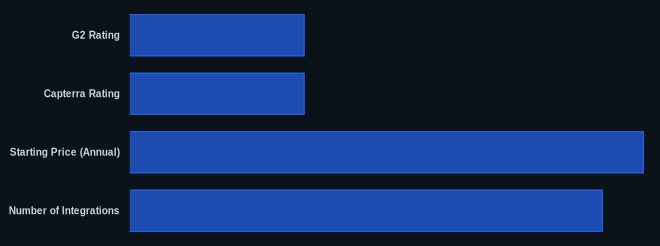
| G2 Rating | 4.6/5.0 (based on 2,500+ reviews) | G2.com |
| Capterra Rating | 4.5/5.0 (based on 1,000+ reviews) | Capterra.com |
| Starting Price (Annual) | $150/user/month (Essentials Plan, as of Q2 2026) | Salesloft.com/pricing/ |
| Free Tier | No (Free Trial available) | Salesloft.com |
| Number of Integrations | 100+ | Salesloft.com |
| Core Focus | AI Revenue Orchestration | Salesloft.com |
| Primary Users | SDRs, AEs, Sales Leaders, RevOps | Salesloft.com |
Our Take
Salesloft's commitment to AI-driven revenue orchestration puts it in a class of its own for 2026. While it is a premium tool with a price tag to match, the platform's AI Cadence engine and Revenue Intelligence Co-Pilot offer a level of intelligent guidance unmatched by many competitors. For established mid-market and enterprise teams, it’s the closest you’ll get to having a truly intelligent co-pilot for your entire GTM strategy, helping you find, engage, and convert more effectively than ever before. However, the estimated 15-20% increase in per-user costs over the last year means prospective buyers need to budget carefully for its full capabilities.
If you're a mid-market or enterprise sales team with complex deal cycles, do the AI-driven personalization and comprehensive RevOps analytics truly justify the significant investment over a simpler sales engagement tool?
FAQ
Q: Is Salesloft worth the cost for a growing mid-market company?
A: For a growing mid-market company with ambitious revenue targets, it is absolutely worth considering. The platform's AI capabilities significantly boost rep efficiency and personalization, which directly impacts conversion rates. But be ready for a substantial investment; this isn't a budget solution.
Q: How does Salesloft compare to competitors like Outreach or Apollo.io in 2026?
A: In 2026, Salesloft differentiates itself with a stronger emphasis on holistic revenue orchestration, especially through its advanced AI chat agents and Revenue Intelligence Co-Pilot. While Outreach excels in pure outbound sales engagement and Apollo.io offers a more integrated data and engagement package for SMBs, Salesloft pushes deeper into RevOps analytics and AI-driven deal health. If you need solid conversation intelligence and predictive forecasting woven into your engagement, the platform often comes out on top. Many teams we've spoken with have moved from Apollo.io to Salesloft as they scaled and needed more sophisticated enterprise-grade AI and RevOps capabilities.
Q: What kind of support can I expect if I encounter problems?
A: Salesloft's customer support, while generally effective for complex issues, can have inconsistent response times for basic queries, particularly for lower-tier plans or during peak hours. Enterprise-level customers typically report a more responsive and dedicated support experience. We recommend clarifying your expected support level during the sales process. The platform is reliable, but occasional minor glitches are part of any complex software, and your support access matters.