For entrepreneurs, remote teams, and SMBs eyeing an e-commerce platform in 2026, Shopify remains a leading contender, but its AI-powered evolution comes with significant caveats. While the platform is easier to use and more feature-rich than ever, particularly with its "RenAIssance" AI updates, a stark divide in user experience persists, especially regarding its often-criticized customer support. Despite a 4.4/5 star rating on G2, its Trustpilot score sits at a troubling 1.3/5 stars, revealing a significant gap between product satisfaction and support frustrations.
What Is Shopify?
It is an all-in-one e-commerce platform for businesses of all sizes, from solo entrepreneurs to large enterprises. The tool provides everything needed to launch, run, and scale an online store, including website hosting, payment processing, inventory management, marketing tools, and multi-channel selling capabilities. Its core use case is to simplify online retail, letting merchants focus on selling products rather than grappling with complex technical infrastructure. The platform is ideal for those who want a powerful, user-friendly solution without needing extensive coding knowledge, offering a comprehensive ecosystem for digital and physical product sales.
Key Features
The platform has been busy, especially with its "Winter 2026 RenAIssance Edition" in March 2026. The focus is clearly on AI and extending core capabilities across more plans.
AI-Powered E-commerce & Operations
The Proactive Sidekick AI is a standout. No longer just a chatbot, it acts as a genuine co-pilot, offering insights and suggesting multi-step tasks like drafting email campaigns or adjusting pricing strategies based on data. This assistant uses natural language, making complex operations feel conversational. The platform also introduced Agentic Commerce Infrastructure, meaning stores are now natively discoverable by AI shopping agents like ChatGPT, Perplexity, and Microsoft Copilot via the Universal Commerce Protocol (UCP). This lets you sell directly within interfaces like Google AI Mode and Gemini. Shopify Magic, an umbrella term for its AI suite, helps with product descriptions, image editing, theme block generation, smart FAQs for customer support, and stock optimization, significantly reducing manual effort. For developers, the Shopify AI Toolkit and Tinker – AI Workspace for Storefront Sections provide a sandboxed environment for theme development with AI assistance.
Enhanced Store Management & Customization
Checkout Extensibility is now available on all paid plans (as of March 2026), not just Shopify Plus. This means greater customization options for the crucial checkout flow, letting you tailor the customer experience without needing custom code for every change. This is a huge win for smaller businesses. The platform continues to invest in headless commerce with Hydrogen and Oxygen Updates, offering flexibility for brands that want a decoupled front-end. For multi-channel sellers, inventory and order management across various platforms have seen significant improvements.
Point-of-Sale (POS) System
The POS Terminal Redesign & Android Customer View (as of March 2026) brings a refreshed UI to the tool's hardware and allows Android devices to serve as customer-facing displays. Improved POS Search & POS Hub (as of March 2026) offer faster product lookups and a unified dashboard for retailers managing multiple physical locations. It is a solid solution for brick-and-mortar stores wanting a cohesive online and offline experience.
Business-to-Business (B2B) Capabilities
Foundational B2B features, previously exclusive to Plus, now extend to non-Plus plans (as of March 2026). This includes company profiles, custom pricing, and payment terms. They’ve also added ACH payments and store credit for B2B transactions (as of March 2026), making it a more viable option for wholesale operations even on lower tiers.
Marketing & Multi-Channel Tools
Built-in marketing tools have expanded significantly (as of March 2026). You get enhanced native email, SMS, segmentation, and automation features, reducing reliance on third-party apps for basic marketing functions. Sell on WordPress (as of March 2026) is another key addition, allowing you to embed its checkout and payment processing directly into your WordPress site. This is great for content-heavy sites that want to add commerce without fully migrating. Multi-location Inventory Transfers for Pickup and Theme Customization by Market (as of April 2026) speed up operations and personalization for global brands.
Pricing
As of May 2026, per the official Shopify pricing page, Shopify offers a range of plans, generally with a 3-day free trial and an introductory offer of $1/month for the first 3 months. Annual billing saves up to 25%. Be warned: the platform implemented significant price increases in 2024, raising the cost of its core plans by over 30%.
- Starter Plan: $5/month (as of May 2026, per the official pricing page). This plan is for social media or messaging app sales; it doesn't include a full online storefront. There's typically no annual pricing option for this tier.
- Basic Plan: $39/month (monthly, as of May 2026, per the official pricing page) or $29/month (annually, as of May 2026, per the official pricing page). This plan includes a full online storefront, unlimited products, 10 inventory locations, and 24/7 support. Online credit card rate (Shopify Payments) is 2.9% + 30¢ (as of May 2026, per the official pricing page). If you use a third-party payment gateway, there's a 2.0% transaction fee (as of May 2026, per the official pricing page). Staff accounts are not included. The monthly price for this plan increased by nearly 35% in 2024.
- Grow Plan (formerly "Shopify" plan): $105/month (monthly, as of May 2026, per the official pricing page) or $79/month (annually, as of May 2026, per the official pricing page). This builds on Basic with 5 staff accounts, higher shipping discounts, $5,000 shipping insurance (US), USPS Priority Mail Cubic pricing (US), and international sales tools. Online credit card rate (Shopify Payments) is 2.7% + 30¢ (as of May 2026, per the official pricing page). Third-party transaction fee is 1.0% (as of May 2026, per the official pricing page). This plan saw a roughly 33% price hike in 2024.
- Advanced Plan: $399/month (monthly, as of May 2026, per the official pricing page) or $299/month (annually, as of May 2026, per the official pricing page). This includes Grow features plus 15 staff accounts, advanced reporting, and real-time carrier-calculated shipping. Online credit card rate (Shopify Payments) is 2.5% + 30¢ (as of May 2026, per the official pricing page). Third-party transaction fee is 0.6% (as of May 2026, per the official pricing page).
- Shopify Plus: Starts at $2,300/month (3-year term, as of May 2026, per the official pricing page) or $2,500/month (1-year term, as of May 2026, per the official pricing page), scaling up to $4,000-$10,000+ for high-volume merchants. This enterprise solution offers full checkout customization, up to 10 expansion stores, unlimited staff accounts, Shopify Flow, a native B2B channel, and dedicated support. Online credit card rate (Shopify Payments) starts from 2.25% + 30¢ (as of May 2026, per the official pricing page). The third-party transaction fee increased from 0.15% to 0.2% (as of May 2026, per the official pricing page) in recent years, and the base price jumped 25%.
Hidden Costs & Add-ons
The platform gets expensive fast. Many users complain about third-party transaction fees if you opt not to use Shopify Payments, which cuts into margins. Essential apps from the Shopify App Store, while powerful, often come with monthly subscriptions that stack up quickly. Premium themes, domain registration ($12-15/year, as of May 2026, per the official pricing page), and Shopify POS Pro ($89/month/location, as of May 2026, per the official pricing page) are all additional costs. If you need complex customizations or integrations, you'll likely incur development costs. Staff accounts were also removed from Starter/Basic plans in 2024, and custom markets reduced from 50 to 3 for all plans, with additional markets costing $59/month (as of May 2026, per the official pricing page) on Advanced.
Pros and Cons
Pros
- Ease of Use & Setup: Building an online store is intuitive, even for beginners. You can launch quickly with customizable templates and a user-friendly interface. According to a G2/Capterra consensus reviewer: "What I like best about Shopify is how easy it makes setting up and managing an online store. Its user-friendly interface, customizable templates, and built-in tools for payments, inventory, and shipping make it simple to run an e-commerce business without needing advanced technical skills."
- Comprehensive E-commerce Features: It provides all the necessary tools for payments, inventory, shipping, and marketing in one place.
- Scalability & Extensive App Ecosystem: The platform can grow with your business, from a single product to a multi-million-dollar operation. Its vast app store allows for extensive customization and added functionality for almost any need.
- Solid POS Integration: The Point-of-Sale system is powerful and tightly integrated, making it excellent for businesses with both online and physical stores.
- Strong Performance & Conversion: Stores built on the platform are generally fast and optimized for conversions.
- Active AI Innovation: Recent updates like Proactive Sidekick AI and Agentic Commerce offer a glimpse into the future, potentially changing how merchants manage and sell.
Cons
- Hidden Costs & App Expenses: While the base pricing is solid, the cost of essential apps, premium themes, and third-party transaction fees (if not using Shopify Payments) can add up rapidly. According to a user from various review platforms: "Solid pricing for what you get, but app costs add up quickly. Third-party payment fees hurt margins."
- Inconsistent Customer Support: Despite 24/7 availability, user reviews are highly polarized. Many report slow response times, unhelpful interactions, and difficulty reaching human agents, especially for complex technical issues. Trustpilot reviews are particularly harsh; one reviewer stated: "Terrible customer service bad bad bad non existent, BE BERY CARFUL WITH THESE PEOPLE IV BEEN TRYING FOR 12 MONTHS TO CLOSE A STORE PRODUCING NOTHING FROM IT, I GET EMAIL SAYING WE WILL BE IN TOUC…"
- Limited Customization Without Coding/Apps: While customizable, truly unique designs or specific functionalities often require coding knowledge or purchasing expensive third-party apps.
- Transaction Fees for Third-Party Gateways: The platform charges a fee if you don't use Shopify Payments, which can be a deal-breaker for some merchants with preferred payment processors.
- Price Increases & Feature Reductions: Recent price hikes on core plans and the removal of staff accounts for Basic plans, along with reducing custom markets, have frustrated some long-term users.
- Potential for Account Suspensions: There are scattered reports of account deactivation for 'price gouging' or 'controversial' products, sometimes without clear warning or explanation, causing significant operational disruption for merchants.
Who Should Use Shopify?
This platform is a powerful choice for a diverse set of users, but it's not for everyone.
It is an excellent fit for startups and small-to-medium businesses (SMBs) looking to launch an online store quickly without a massive upfront investment in development. If you need a user-friendly interface that lets you manage products, orders, and basic marketing without a steep learning curve, you'll love it.
Businesses with physical storefronts will particularly benefit from its solid POS system. If you want a seamless experience between online and in-person sales, managing inventory and customer data from a single platform, the tool shines.
Dropshippers and print-on-demand businesses also find a strong ally in Shopify due to its extensive app integrations with major suppliers and ease of order fulfillment. Its performance and conversion optimizations are crucial for these high-volume, low-margin operations.
It is also suitable for entrepreneurs prioritizing growth and scalability who are willing to invest in the app ecosystem as their needs evolve. The platform's ability to handle increasing traffic and product catalogs is a major advantage.
However, if you're a large enterprise requiring deep, custom back-end integrations or have a highly specific, complex B2B sales cycle that necessitates full code ownership, you might find Adobe Commerce (Magento) or a fully custom build more suitable. Similarly, if you're an established business with strong development resources looking for complete control over your store's infrastructure and want to avoid transaction fees, BigCommerce (with its no-third-party-transaction-fee policy) or an open-source solution like WooCommerce might offer better long-term value, especially if you have a WordPress-heavy content strategy.
Data at a Glance
| Metric | Value | Source |
|---|---|---|
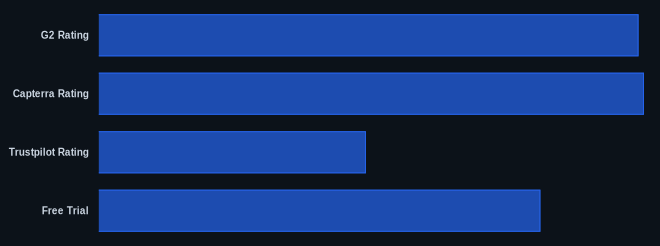
| G2 Rating | 4.4/5 stars | G2 Shopify Reviews |
| Capterra Rating | 4.5/5 stars | Capterra Shopify Reviews |
| Trustpilot Rating | 1.3/5 stars | Trustpilot Shopify Reviews |
| Starting Price | $5/month (Starter, as of May 2026) | Shopify Pricing |
| Free Trial | 3 days (+ $1/month for 3 months) | Shopify Pricing |
| Product Updates (2026) | 150+ in March 2026 | Shopify.com |
Our Take
We've been using and recommending e-commerce platforms for years, and Shopify has always been a top contender. The 2026 reality of Shopify is a study in contrasts. While its AI capabilities are genuinely exciting, making store management smarter and opening new selling channels through agentic commerce, the platform's price hikes and consistent complaints about customer support reveal a significant tension. Shopify provides an incredible, evolving tool that excels in ease of use and features, as its high G2 and Capterra ratings show. Yet, the abysmal 1.3/5 Trustpilot score suggests that when problems arise, merchants can face a frustrating and unresponsive support system. For buyers, this means you're getting a powerful, innovative tool that can definitely boost sales, but you must factor in the potential for significant app expenses and a potentially subpar support experience for complex issues. If you need robust features and are willing to navigate a potentially frustrating support system or pay for third-party help, Shopify remains a strong choice. But if dependable, human-centric support is your highest priority, you might want to consider alternatives.
Given the significant price increases and rising app costs, are you truly seeing enough additional value from Shopify's AI features to justify the expanding total cost of ownership?
FAQ
Q1: Is Shopify expensive for small businesses in 2026?
While the base plans start relatively affordably (as low as $29/month annually for Basic, as of May 2026), the costs can quickly escalate. Many essential functionalities require paid apps from the App Store, which stack up monthly. You'll also incur third-party transaction fees if you don't use Shopify Payments. So, for a small business, the total cost of ownership often includes a lot more than just the monthly subscription fee.
Q2: How reliable is Shopify's customer support, especially with the new AI features?
Customer support receives highly polarized reviews. While the platform offers 24/7 support via various channels, many users report inconsistencies, slow response times, and difficulty resolving technical issues. The recent push toward AI-powered assistance, like Proactive Sidekick, aims to speed up support, but users often express frustration when they need nuanced, human problem-solving that AI chatbots can't provide. Plan for some self-service and community research for common problems.
Q3: How do Shopify's AI advancements impact my store's growth and sales in 2026?
The 2026 "RenAIssance" updates (as of March 2026), particularly the Proactive Sidekick AI and Agentic Commerce Infrastructure, are designed to significantly boost your store's efficiency and reach. Sidekick acts as a strategic co-pilot, helping with tasks like campaign drafting or pricing adjustments, freeing up your time. Agentic Commerce means your products are natively discoverable and purchasable directly through AI shopping agents, potentially opening entirely new sales funnels without additional marketing effort. These features are positioned to be significant growth drivers, especially as AI adoption in shopping becomes more widespread.