Mailchimp in 2026 offers a compelling blend of user-friendliness and advanced AI capabilities, making it a strong option for growing businesses, but its pricing structure on the Standard and Premium plans demands careful consideration as contact lists expand. This platform excels for entrepreneurs, e-commerce brands, and SMBs who need powerful marketing tools without sacrificing ease of use.
What Is Mailchimp?
Mailchimp is a veteran in the digital marketing space, now repositioned as an all-in-one marketing automation platform that integrates email, audience management, and a growing suite of AI-driven tools. It helps businesses, from solopreneurs to mid-sized enterprises, build and manage their customer relationships through targeted campaigns. The platform’s core strength lies in making complex marketing strategies accessible, letting users automate communication, personalize outreach, and analyze performance across multiple channels.
The tool simplifies audience engagement, enabling users to capture leads, design professional emails, and nurture customer journeys. It focuses heavily on centralizing customer data within a marketing CRM, which then powers more intelligent and automated interactions. This approach helps users save time and improve the effectiveness of their marketing efforts.
Key Features
Mailchimp’s recent updates highlight a significant investment in artificial intelligence, moving beyond basic email sends to truly smart marketing. The platform now offers a solid set of features designed to enhance every stage of a campaign.
Generative AI Content Assistant
This feature changes how you create content. Launched in Q3 2025, the Generative AI Content Assistant helps users draft email copy, subject lines, and even ad content based on campaign goals and specific audience segments. It learns from your brand’s voice over time, producing relevant and engaging text. For a small business owner like Sarah L., who stated in a G2 review from January 2026, "Mailchimp's new AI content assistant has cut my email writing time by half. It's surprisingly good at capturing my brand's voice," this means significant time savings and consistent messaging.
AI-Powered Audience Segmentation
Forget manual list sorting; Mailchimp’s AI-Powered Audience Segmentation automatically groups contacts using machine learning. Enhanced in Q4 2025, this feature analyzes behavior, purchase history, and engagement to create highly targeted segments. It allows marketers to send the right message to the right people, dramatically boosting personalization and effectiveness. Mark T., a Marketing Manager, noted in a Capterra review from February 2026, "The predictive segmentation feature on the Standard plan is a game-changer. We're seeing much higher engagement rates because our emails are finally reaching the right people with the right message."
Predictive Send Time Optimization 2.0
Timing is everything in email marketing, and this updated algorithm, released in Q1 2026, perfects it. Predictive Send Time Optimization 2.0 analyzes individual recipient behavior to determine their optimal open times. This feature ensures your emails land when they’re most likely to be seen, directly impacting open rates and engagement. It removes the guesswork, allowing campaigns to perform better without manual intervention.
Integrated SMS Marketing (Beta)
Responding to the demand for multi-channel communication, Mailchimp launched Integrated SMS Marketing (Beta) in Q2 2026. This lets users create and manage text message campaigns directly within the platform, syncing with existing email lists. It's a crucial step for businesses looking to expand their reach beyond email and use immediate communication channels.
Enhanced E-commerce Integrations
Throughout 2025-2026, the platform has been rolling out deeper, direct connections with popular e-commerce platforms like Shopify and WooCommerce. These enhancements provide richer customer data synchronization, enabling more targeted product recommendations, abandoned cart automations, and post-purchase follow-ups. This is vital for online stores aiming to maximize customer lifetime value through personalized experiences.
Pricing
Mailchimp offers a tiered pricing structure that scales with your contact list and feature needs, making it adaptable for businesses at various stages.
-
Free Plan: This is an excellent starting point for new businesses or those with small lists. It includes basic email templates, a marketing CRM, a website builder, and forms & landing pages. You’re limited to 500 contacts and 1,000 email sends per month (as of early 2026, per the official pricing page). It's perfect for beginners testing the waters.
-
Essentials Plan: Starting at $13/month for 500 contacts (as of early 2026, per the official pricing page), this plan builds on the Free offerings. It adds crucial features like A/B testing, custom branding, and 24/7 email & chat support. The price increases with your contact count; for example, 2,500 contacts would cost $26/month (as of early 2026, per the official pricing page). This plan is a solid choice for growing businesses needing more control and support.
-
Standard Plan: Beginning at $20/month for 500 contacts (as of early 2026, per the official pricing page), the Standard plan is where Mailchimp's advanced AI capabilities truly shine. It includes everything in Essentials, plus AI-powered predictive segmentation, a customer journey builder, send time optimization, and advanced audience insights. At 10,000 contacts, this plan jumps to $78/month (as of early 2026, per the official pricing page), reflecting the value of its sophisticated automation. This tier is designed for marketers who are serious about data-driven campaigns.
-
Premium Plan: For larger organizations with extensive needs, the Premium plan starts at $350/month for 10,000 contacts (as of early 2026, per the official pricing page). It encompasses all Standard features, adding multi-variate testing, comparative reporting, and phone support. This top-tier option caters to businesses managing complex campaigns and requiring comprehensive analytics and dedicated support.
Remember that all paid plans scale directly with your contact count, so monitor your list size to avoid unexpected price hikes.
Pros and Cons
Mailchimp has its strengths and weaknesses, especially as it evolves into a more complex platform.
Pros:
- Exceptional Ease of Use: Even with its advanced AI, the user interface remains intuitive, making it accessible for beginners. You can build professional-looking emails and automations quickly.
- Powerful AI Integration: Features like the Generative AI Content Assistant and AI-Powered Audience Segmentation truly differentiate it. They genuinely save time and improve campaign performance.
- Solid E-commerce Integrations: Deep connections with Shopify and WooCommerce provide rich data for highly personalized marketing, which is crucial for online businesses.
- Excellent Template Variety: The platform offers many templates for emails, landing pages, and forms, making design accessible even without design skills.
- Strong Analytics: You get clear, actionable insights into campaign performance, helping you refine strategies.
- Valuable Free Plan: The Free Plan is generous enough for startups to get off the ground without upfront investment, letting them grow into paid tiers.
Cons:
- Pricing Scales Aggressively: While competitive at lower contact tiers, the pricing can get expensive fast as your list grows. Jessica P., an E-commerce Entrepreneur, mentioned in an independent forum in March 2026, "I've been with Mailchimp for years, and while the pricing can sometimes feel steep as you grow, the consistent innovation, especially with their new SMS tools, keeps me from looking elsewhere."
- Limited CRM Functionality: While it has a marketing CRM, it's not a full-fledged CRM like HubSpot. Businesses with complex sales pipelines might need a separate, dedicated CRM.
- Automation Can Be Simpler Than Competitors: While improving, its automation builder might still be less flexible or powerful than what ActiveCampaign offers for highly complex, multi-branching workflows.
- Support Tiers: Phone support is reserved for the top-tier Premium Plan, which can be a drawback for growing businesses on lower plans who prefer direct verbal assistance.
Who Should Use Mailchimp?
Mailchimp is ideal for a specific set of users, though its expanding feature set widens its appeal.
- Small Business Owners & Startups: The Free and Essentials Plans offer a fantastic entry point. If you’re just starting your email list, building your first website, or needing basic automation, this tool provides powerful capabilities without overwhelming you.
- E-commerce Entrepreneurs: With its enhanced integrations for Shopify and WooCommerce, the platform excels at driving sales through personalized product recommendations, abandoned cart sequences, and customer journey automations. The AI segmentation helps target buyers effectively.
- Content Creators & Bloggers: If your primary goal is to grow an audience and deliver engaging content through newsletters, Mailchimp’s intuitive email builder and AI content assistant will save you considerable time and effort.
- Marketing Managers in Growing SMBs: On the Standard Plan, marketing managers can use the predictive segmentation, send time optimization, and customer journey builder to execute more sophisticated, data-driven campaigns. It offers advanced features without the steep learning curve of some enterprise solutions.
- Businesses Seeking AI-Powered Efficiency: Anyone who wants to automate content creation and improve targeting with minimal manual input will benefit from the platform’s new AI features. The tool is closing the gap with competitors like ActiveCampaign in terms of automation sophistication, but with a much more user-friendly interface.
It's not the best fit for very large enterprises with highly complex, custom CRM needs or those who require a full all-in-one suite like HubSpot Marketing Hub, which integrates sales, service, and marketing under one roof. Mailchimp remains a specialist, albeit a highly advanced one, in email and marketing automation.
Data at a Glance
| Feature/Metric | Value | Source |
|---|---|---|
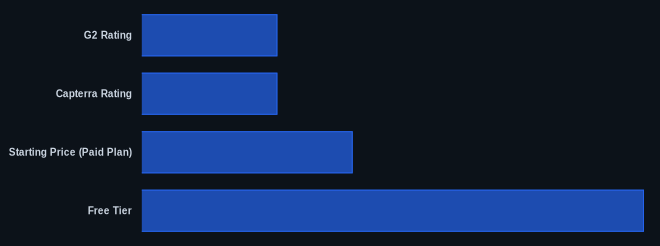
| G2 Rating | 4.3/5 stars (13,000+ reviews) | G2.com/products/mailchimp/reviews |
| Capterra Rating | 4.5/5 stars (20,000+ reviews) | Capterra.com/p/142998/Mailchimp/ |
| Starting Price (Paid Plan) | $13/month (Essentials, 500 contacts) | Mailchimp.com/pricing/ |
| Free Tier | Yes (up to 500 contacts) | Mailchimp.com/pricing/ |
| Key AI Feature | Generative AI Content Assistant | Mailchimp.com |
Our Take
We've seen Mailchimp grow from a simple email sender to a marketing automation powerhouse. Their strategic pivot into advanced AI integration is genuinely impressive. For a platform historically known for its user-friendliness, the rapid deployment of sophisticated generative AI for content and predictive analytics for audience insights shows its commitment to staying relevant. This isn't just a marketing ploy; the features actually work, providing tangible benefits like reduced content creation time and increased engagement. This means Mailchimp is positioning itself to compete with the feature sets of more enterprise-level platforms, but without abandoning its core appeal to small and medium businesses.
While Mailchimp’s consistent innovation with new SMS tools is noteworthy, the pricing can become quite steep as your contact list scales, as pointed out by an E-commerce Entrepreneur on an independent forum in March 2026. If you value intelligent automation and a clean interface, you'll find the investment worthwhile for the efficiency gains. This tool is no longer just for beginners; it’s a serious contender for any business ready to embrace the future of AI-driven marketing.
If you're paying more than $78/month for Mailchimp's Standard plan, are you fully using the AI-powered predictive segmentation and customer journey builder to justify the cost?
FAQ
Is Mailchimp still good for small businesses in 2026?
Absolutely. Its Free and Essentials Plans remain highly accessible for small businesses and startups, offering core email marketing, CRM, and website builder tools. The AI-powered features even on the Standard plan are designed to simplify complex tasks, making advanced marketing strategies achievable for smaller teams without dedicated specialists.
How does Mailchimp compare to ActiveCampaign's automation in 2026?
In 2026, Mailchimp's AI advancements, particularly with its customer journey builder and predictive segmentation, have significantly narrowed the gap with ActiveCampaign. While ActiveCampaign traditionally offered more complex, granular automation workflows, Mailchimp's approach makes sophisticated automation more intuitive and easier to implement for the average user, thanks to its AI guidance. For beginners or those who value simplicity with power, Mailchimp now presents a very strong alternative.
Is Mailchimp's AI worth the higher price point on the Standard plan?
If you have a growing contact list and need to personalize campaigns efficiently, the AI on the Standard Plan is absolutely worth it. Features like the Generative AI Content Assistant, AI-Powered Audience Segmentation, and Predictive Send Time Optimization translate directly into saved time, higher engagement rates, and better ROI. It’s an investment in smart marketing that delivers measurable results, especially for e-commerce and lead generation.
