Salesforce Sales Cloud, now officially Agentforce Sales, carries a 4.4/5 star rating on G2 and Capterra, making it an undisputed enterprise CRM leader. The platform is reinvented for the age of autonomous AI, but it's not for the faint of heart or the budget-conscious startup; it's built for large, complex sales organizations and mid-market teams ready to invest heavily in a system that can bend to their every nuanced process, especially with its new AI agent capabilities. Its core value lies in customization and powerful features, but its high cost and complexity pose a significant barrier for many.
What Is Agentforce Sales (formerly Salesforce Sales Cloud)?
Agentforce Sales, formerly known as Salesforce Sales Cloud, is a customer relationship management (CRM) platform that helps sales teams manage their entire sales cycle, from lead generation to deal closure and post-sale support. It’s an enterprise-grade solution that provides tools for contact management, opportunity tracking, forecasting, reporting, and, most recently, autonomous AI-driven selling. The platform is aimed at organizations with intricate sales processes, needing deep customization, and those with significant resources to dedicate to implementation and administration. It helps businesses track every interaction, automate workflows, and gain insights, increasingly powered by generative AI.
Key Features
The heart of Agentforce Sales lies in its capacity for immense scalability and its ever-evolving feature set, particularly around artificial intelligence. For 2026, the focus is squarely on making sales teams more efficient through smart automation.
Autonomous AI Agents (Agentforce)
The biggest shift for 2026 is the introduction of Agentforce, integrating autonomous AI agents directly into the sales workflow. These agents handle tasks traditionally performed by humans, such as inbound lead qualification, nurturing, and even parts of prospecting. For example, an AI agent might automatically qualify a lead based on website behavior and then initiate a personalized email sequence. Salesforce calls this a "headless" approach, where the AI works in the background, updating records and suggesting next steps, but some professionals express confusion regarding its ultimate direction and implementation.
Sales managers also benefit from these agents, which analyze conversations, automatically update CRM records, and flag deals needing attention. This cuts down on manual data entry and allows sales reps to focus more on direct customer engagement. Agent implementation services, however, come with a separate cost of $2,000-$6,000 per agent (as of June 2026, per the official pricing page), adding to the complexity.
Unmatched Customization and Scalability
Agentforce Sales remains the gold standard for customization. You can tailor almost every aspect of the platform—from custom fields and objects to intricate workflow rules and approval processes—to match your exact sales methodology. This means a company like a global pharmaceutical firm can build a CRM that reflects its unique regulatory compliance and multi-stage approval pipelines, rather than adapting its processes to the software.
According to Scott from Nerds Xpress on G2: "HIGHLY customizable. All data fields can be pulled into reporting/dashboards. To implement properly, you have to reverse-engineer what metrics are important to your business." This level of flexibility, while powerful, contributes significantly to the platform's steep learning curve and high implementation costs.
Powerful Pipeline Management and Reporting
The platform offers industry-leading tools for managing sales pipelines, tracking opportunities, and forecasting revenue. Its capabilities extend to advanced pipeline and territory management, allowing sales leaders to segment territories, set shared boundaries, and align quota plans across teams. The Spring '26 release introduced improved Pipeline Inspection with a new Activity column, providing a heatmap view for engagement levels, making it easier to spot at-risk deals.
For analytics, the software excels. Its reporting engine lets you create highly detailed dashboards and reports on almost any data point, including opportunity scoring and win/loss analysis. Tableau integration, now called Tableau Next, pushes these capabilities even further for complex data visualization.
Extensive Ecosystem and Integrations
With over 7,000 applications on the AppExchange, Agentforce Sales boasts the largest CRM ecosystem. Need an advanced document management system? There's an app for that. Want better deduplication tools or e-signature integration? You'll find multiple options. This vast network allows businesses to extend the platform's functionality to almost any need, making it a central hub for all sales and customer-related activities.
This ecosystem is a double-edged sword, however. Many users find themselves needing multiple AppExchange add-ons for capabilities that they feel should be native, driving up the total cost of ownership.
Advanced AI-Powered Insights (Einstein)
Beyond Agentforce, the platform integrates Einstein AI for predictive and generative insights. This includes enhanced lead scoring that incorporates behavioral signals and engagement history, deal risk detection, and AI-powered pipeline insights. Einstein Conversation Insights (ECI) has been enhanced to combine call summaries and generative insights from voice and video interactions, with data stored natively on the Salesforce platform by Summer 2026. This allows sales leaders to quickly understand key trends from sales calls without listening to every recording.
For sales reps, features like Momentum capture, structure, and write customer interactions to Salesforce in real time, reducing post-call administrative work. This helps keep data fresh and actionable without manual effort.
Slack-First Sales
Salesforce has deeply integrated Slack into its sales workflows. The "Slack-First Sales" initiative ensures that CRM context, conversational AI, and critical sales updates are accessible directly within Slack channels. This allows for real-time collaboration on deals, quick access to customer information, and streamlined communication among sales teams, helping remote and distributed teams stay aligned.
The comprehensive Slack Enterprise+ features are only available on the highest Agentforce 1 Sales tier, indicating a push towards premium subscriptions for the most advanced collaboration tools.
Pricing
Agentforce Sales pricing is complex and has seen multiple changes, especially regarding its new AI features. The information below reflects annual billing as of March 2026, per the official Salesforce pricing page. Monthly billing for Starter and Pro Suites is typically 20-30% higher.
- Free Suite: $0/user/month (up to 2 users, as of March 2026). This is a basic CRM, offering limited custom objects and automation. It's a taste, not a solution for serious sales teams.
- Starter Suite: $25/user/month (as of March 2026). An all-in-one CRM for small businesses, it includes basic sales, service, marketing, and Slack. It's designed to get you going but quickly reveals its limitations as you scale.
- Pro Suite: $100/user/month (as of March 2026). Builds on Starter features with enhanced customization, workflow automation, quoting, forecasting, and AppExchange access (limited to 5 flow automations). This is where many growing businesses start to feel the pinch between desired functionality and cost.
- Enterprise: $175/user/month (as of March 2026). Aimed at larger organizations, this tier offers advanced pipeline and territory management, opportunity scoring, and extensive customization and automation capabilities. The price increased by 6% in August 2025.
- Unlimited: $350/user/month (as of March 2026). Includes all Enterprise features plus Premier Success support, sandboxes for development, full API access, predictive AI, conversation intelligence, and extra storage. This tier also saw a 6% price hike in August 2025.
- Agentforce 1 Sales: $550/user/month (as of March 2026). This is the premium tier, bundling Unlimited features with unmetered Agentforce AI, Salesforce Spiff (commissions), Sales Planning, Sales Programs, Salesforce Maps, Tableau Next, and Slack Enterprise+. This is where the platform's full AI vision truly becomes accessible, but at a significant per-user cost.
Hidden Costs and Add-ons:
The per-user fee is just the beginning.
- Implementation Costs: These are almost always underestimated. Expect to pay anywhere from $10,000 to over $500,000 (as of June 2026), with many businesses underestimating by 40-80%. This is the cost of setting up the platform, migrating data, and configuring it to your specific needs.
- Admin Salaries: To keep the platform running smoothly and use its full potential, you'll likely need dedicated administrators. Their salaries typically range from $80,000-$120,000 per year (as of June 2026).
- AppExchange Add-Ons: For critical functionalities like advanced reporting, deduplication, document management, and e-signatures, you'll often need third-party apps, each with its own subscription fee. These can quickly add up.
- Agentforce Pricing Complexity: The pricing for Agentforce AI has changed multiple times since September 2024. It's now credit-based (with 200,000 free Flex Credits with Foundations), but agent implementation services are separate and costly. Clients face licensing complications, sometimes needing further upgrades to access specific AI capabilities they thought were included.
Pricing for Salesforce products is opaque, and the constant name changes and re-packaging of features, particularly for AI, contribute to a "headless" feeling among professionals trying to recommend solutions. Consultants struggle to advise clients effectively when the licensing structure for core capabilities shifts so frequently.
Pros and Cons
Choosing Agentforce Sales is a strategic decision with significant trade-offs.
Pros:
- Unmatched Customizability: No other CRM comes close to the platform's ability to be tailored to the most complex sales processes. You can build it exactly how you need it.
- Powerful Pipeline Management: The tools for tracking opportunities, managing territories, and forecasting are industry-leading, providing deep visibility into sales performance.
- Enterprise-Grade Reporting: The analytics and dashboard capabilities allow for granular insights into every aspect of your sales operations.
- Extensive Ecosystem: The AppExchange provides a solution for almost any additional functionality you could imagine, integrating easily.
- Advanced AI Capabilities: Agentforce AI and enhanced Einstein features automate mundane tasks, predict outcomes, and provide deep conversational insights, fundamentally changing how sales teams operate.
- Scalability for Growth: The software grows with you, handling millions of records and thousands of users without performance degradation. According to Nate Wilson: "Salesforce's deep functionality crossed with a fairly intuitive and modern UI make it clear why it's such a dominant competitor in the CRM field."
Cons:
- High Total Cost of Ownership: This gets expensive fast. Between licenses, implementation, ongoing administration, and required AppExchange add-ons, the sticker price is just a fraction of the real cost.
- Steep Learning Curve: New users, especially those not tech-savvy, will find the platform complex and overwhelming. It requires significant training and ongoing education.
- Confusing AI Pricing and Direction: The rapid pace of AI innovation is impressive, but the constant re-packaging, name changes (like Agentforce), and unclear licensing models for AI features create significant confusion for existing and potential customers.
- Customer Support Issues (without Premium): Unless you pay for premium support, response times can be slow, and getting direct help is often a struggle. According to Scott Shy: "Customer support at the lower levels. Unless you have their premium support, their customer service is not quick to act."
- Complexity Can Lead to Underutilization: If not properly implemented and managed, teams can struggle to adopt the platform fully, leading to expensive shelfware.
- Performance Reliability: While generally stable, the platform has experienced occasional downtime or performance degradation, as seen with the USA26 instance issues in January 2026.
Who Should Use Agentforce Sales?
Agentforce Sales is explicitly for specific types of organizations and teams:
- Mid-Market to Enterprise Businesses: If your sales team is larger than 25-50 people, operates with complex sales cycles, and has dedicated IT or CRM administration resources, the platform is a strong contender.
- Companies Requiring Deep Customization: Organizations with highly specific or unique sales processes that generic CRMs can't accommodate will find its flexibility invaluable. Think multi-level approvals, intricate territory rules, or industry-specific data tracking.
- Businesses Prioritizing AI-Driven Automation: If you're looking to use autonomous AI agents for lead qualification, nurturing, and sales management tasks, and you have the budget to invest in this technology, Agentforce Sales is leading the way.
- Teams with Budget for Implementation and Administration: Be realistic about the total cost. If you have the financial muscle for a lengthy implementation, ongoing admin salaries, and potential AppExchange add-ons, the platform offers unparalleled power.
- Growth-Focused Companies Needing Scalability: As your business expands, the platform scales without issue, ensuring your CRM won't be a bottleneck to future growth.
It's not for small startups, teams on a tight budget, or those looking for an "out-of-the-box," easy-to-use solution. For those, alternatives like HubSpot Sales Hub or Zoho CRM offer a more streamlined, cost-effective entry point.
Data at a Glance
| Metric | Value | Source |
|---|---|---|
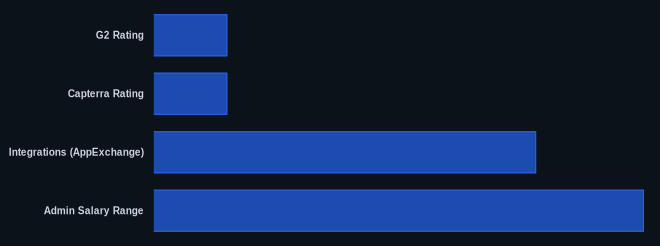
| G2 Rating | 4.4/5 stars | G2.com |
| Capterra Rating | 4.4/5 stars | Capterra.com |
| Starting Price | $0/user/month (Free Suite, as of March 2026) | Salesforce Pricing |
| Integrations (AppExchange) | 7,000+ | Salesforce AppExchange |
| Free Tier Available | Yes | Salesforce Pricing |
| Agentforce 1 Sales | $550/user/month (as of March 2026) | Salesforce Pricing |
| Admin Salary Range | $80,000-$120,000 | Salesforce.com |
Our Take
Agentforce Sales in 2026 is a powerful platform, clearly leading the charge into an AI-first sales future. The ambition behind autonomous AI agents and the continued investment in predictive analytics is impressive. However, the constant rebrands, feature name changes, and the bewildering complexity of AI licensing are causing real headaches for customers and consultants alike, making its full adoption challenging. It feels like the platform is innovating at light speed without a clear communication strategy, leaving many feeling "headless" about the best way to use these new capabilities. If you have the budget and internal resources to navigate the financial and strategic complexities, this software will pay dividends in automation and insight. Otherwise, you'll find yourself paying a lot for features you can't quite grasp or implement. If you're considering the Agentforce 1 Sales tier, have you fully accounted for the implementation costs of the AI agents on top of the $550/user/month subscription?
FAQ
Is Agentforce Sales worth the high investment for an SMB?
For most small to medium businesses (SMBs) without complex processes or dedicated admin staff, the high total cost of ownership, including significant implementation fees and ongoing administration, likely makes Agentforce Sales an overinvestment. You'll find more accessible and cost-effective solutions like HubSpot Sales Hub or Zoho CRM better suited to your needs, especially if ease of use and quicker onboarding are priorities.
How does Agentforce Sales handle its new autonomous AI agents in terms of pricing?
Agentforce Sales offers a credit-based system for its autonomous AI agents, with 200,000 free Flex Credits typically included with foundational plans. However, agent implementation services are separate, costing $2,000-$6,000 per agent (as of June 2026). This means while the AI features are present, the hands-on work to deploy and configure these agents in your specific workflow adds a significant, often unexpected, cost.
Can I migrate my existing CRM data to Agentforce Sales easily?
Migrating existing CRM data to Agentforce Sales can be a complex and time-consuming process. While the platform supports data imports, the level of customization and the need to map your legacy data accurately to the software's structure often requires professional services. This contributes to the high implementation costs, which are frequently underestimated by businesses, sometimes by 40-80%.
