Salesforce Sales Cloud remains the gold standard in CRM, but in 2026, its new AI capabilities are making it more adaptable for scaling SMBs, not just enterprises. This review will help entrepreneurs and team leads understand if its unparalleled power justifies the investment for their specific needs.
What Is Salesforce Sales Cloud?
Salesforce Sales Cloud is a comprehensive, cloud-based customer relationship management platform designed to manage and automate sales, marketing, and customer service operations. It centralizes customer data, streamlines sales processes from lead to close, and provides powerful analytics for sales forecasting and performance tracking. Its core use case is empowering sales teams of all sizes to be more efficient and close more deals, now significantly enhanced by real-time AI.
The platform is built to handle complex sales cycles and large volumes of data, making it ideal for organizations that need deep customization and scalability. With the latest Einstein AI integrations and Data Cloud (formerly Genie), Sales Cloud offers a 360-degree view of the customer, enabling highly personalized sales interactions and predictive insights.
Key Features
Contact and Account Management
Sales Cloud provides a centralized database for all customer and prospect information, including communication history, purchase records, and key relationships. This ensures every team member has a complete view of the customer, facilitating informed decision-making and personalized outreach.
Lead and Opportunity Management
From initial lead capture to qualification and conversion, the platform offers customizable sales paths and automation tools to guide reps through each stage. Einstein AI assists with lead scoring, prioritizing the most promising leads and providing insights into the likelihood of closing opportunities.
Sales Forecasting and Reporting
Robust reporting and dashboard tools offer real-time visibility into sales performance, pipeline health, and revenue projections. Managers can create custom reports to track KPIs, identify trends, and make data-driven decisions. AI-powered forecasting provides more accurate predictions, helping teams hit their targets.
Workflow Automation (Salesforce Flow)
Automate repetitive tasks like email alerts, task assignments, and approval processes. Salesforce Flow allows businesses to design custom workflows that reflect their unique sales operations, reducing manual effort and improving efficiency.
Mobile CRM Access
The dedicated mobile app provides sales teams with access to crucial CRM data and functionalities on the go. Reps can update records, log calls, manage opportunities, and access reports directly from their mobile devices, ensuring productivity outside the office.
Einstein AI and Data Cloud
This is where Sales Cloud truly shines in 2026. Einstein AI offers predictive lead scoring, opportunity insights (e.g., "Next Best Action"), and conversational AI for sales assistance. Data Cloud unifies customer data from various sources into a single, real-time profile, enabling hyper-personalization and deeper insights for sales and marketing.
Integrations (AppExchange)
The Salesforce AppExchange is a vast marketplace offering tens of thousands of third-party applications and integrations. This allows businesses to extend Sales Cloud's functionality and connect it with virtually any other business tool, from marketing automation to ERP systems like QuickBooks and communication platforms like Slack.
Pricing
As of May 2026, per the official Salesforce Sales Cloud pricing page:
- Starter: $25/user/month (billed annually) – Ideal for small teams (up to 10 users) needing core CRM functionality. Includes account and contact management, opportunity and lead tracking, a mobile app, and basic reporting.
- Professional: $80/user/month (billed annually) – A complete CRM solution for any size team. Adds campaign management, customizable reports and dashboards, sales console app, forecasting, and partner management.
- Enterprise: $165/user/month (billed annually) – Deeply customizable with advanced features. Includes advanced customization, workflow and approval automation, API access, and foundational Salesforce Einstein AI features (e.g., predictive lead scoring).
- Unlimited: $330/user/month (billed annually) – The all-inclusive tier with unlimited support and advanced capabilities. Adds unlimited custom apps, 24/7 toll-free support, a full sandbox environment, and advanced Einstein AI features (e.g., Einstein Sales Bots).
There is no free tier available, but Salesforce typically offers a free trial for evaluation purposes.
Pros and Cons
Pros:
- Unparalleled customization options to fit specific business processes.
- Extensive feature set covering every aspect of the sales cycle.
- Massive AppExchange ecosystem for integrations, offering tens of thousands of apps.
- Powerful Einstein AI capabilities for predictive insights and automation.
- Robust reporting and analytics tools for deep sales performance analysis.
- Highly scalable, capable of supporting the largest enterprises.
Cons:
- High cost, which can quickly escalate with add-ons and higher tiers.
- Steep learning curve requiring significant training for new users.
- Complex initial setup and ongoing administration can demand dedicated resources.
- Can feel overwhelming for smaller teams or those new to CRM.
- Customer support quality can vary depending on the issue and tier.
Who Should Use Salesforce Sales Cloud?
Salesforce Sales Cloud is best suited for mid-sized to large enterprises with complex sales processes, growing sales teams, and the need for a highly customizable and scalable solution. Companies with dedicated CRM administrators and larger budgets will extract the most value. Its deep reporting, AI capabilities, and integration ecosystem make it powerful for businesses that need precise control over their sales pipeline and a 360-degree customer view.
While the Starter and Professional plans aim to appeal to smaller businesses, companies prioritizing ease of use and a lower initial investment might first consider alternatives like HubSpot CRM, which offers a more out-of-the-box experience tailored for SMBs. However, for those with ambitious growth plans and an evolving sales structure, Sales Cloud provides the infrastructure to scale indefinitely.
Data at a Glance
| Feature | Value | Source |
|---|---|---|
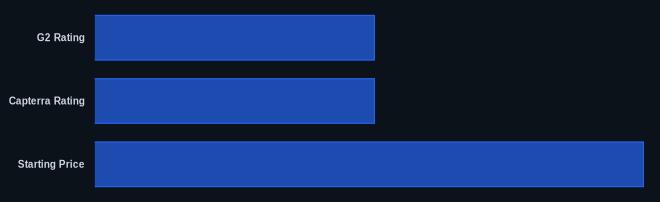
| G2 Rating | 4.2 out of 5 stars (13,000+ reviews) | G2.com Salesforce Sales Cloud |
| Capterra Rating | 4.3 out of 5 stars (2,000+ reviews) | Capterra.com Salesforce Sales Cloud |
| Starting Price | $25/user/month (billed annually) | Salesforce Sales Cloud Pricing |
| AppExchange Integrations | Tens of thousands | Salesforce AppExchange |
| Free Tier | No | Salesforce Sales Cloud Pricing |
Our Take
Salesforce Sales Cloud in 2026 isn't just about market dominance; it's about pushing the boundaries of what a CRM can do with AI. We see its Einstein AI and Data Cloud integrations as truly differentiating, offering predictive insights that can genuinely impact sales performance. While the complexity and cost remain significant hurdles, particularly for smaller organizations, the investment pays off for teams that commit to fully leveraging its ecosystem. It’s a platform you grow into, not out of, making it a powerful foundation for ambitious scaling.
FAQ
Is Salesforce Sales Cloud too expensive for a growing SMB?
Salesforce Sales Cloud can be expensive, especially with higher tiers and add-ons. While the Starter plan is $25/user/month, the full power of the platform often requires Professional ($80) or Enterprise ($165) tiers, which can add up quickly. It's crucial to assess your team's specific needs and budget, as the comprehensive features and AI can justify the cost for businesses focused on aggressive growth and complex sales processes.
What are the main benefits of Salesforce's Einstein AI in 2026?
Einstein AI in 2026 significantly enhances sales efficiency and effectiveness. Key benefits include predictive lead scoring to prioritize prospects, opportunity insights for "next best actions," automated data entry, and conversational AI for sales assistance. This translates to more targeted sales efforts, reduced manual work, and ultimately, a higher win rate.
How steep is the learning curve for new Salesforce Sales Cloud users?
The learning curve for Salesforce Sales Cloud can be quite steep, particularly for new users without prior CRM experience. Its vast feature set, deep customization options, and often complex UI mean that dedicated training and ongoing support are typically required. Businesses should factor in time and resources for user adoption to maximize their return on investment.