Mailchimp (Mailchimp.com) costs $0.00/month (as of early 2026, per the official Mailchimp pricing page) for its Free Plan, making it an excellent starting point for new businesses to begin email marketing without upfront costs. This platform, once known "just for email," now delivers sophisticated AI-powered tools for SMBs and marketers navigating a complex digital landscape. The article explores its current capabilities, focusing on the latest AI integrations and evolving pricing, for entrepreneurs and remote teams ready to scale their digital outreach.
What Is Mailchimp?
Mailchimp is a cloud-based marketing platform that helps small to medium-sized businesses connect with their audience through email campaigns, marketing automation, and multi-channel outreach. It simplifies complex marketing tasks, making them accessible even without a dedicated marketing team. The platform has significantly evolved from its origins as a basic email service, now offering a suite of AI-enhanced tools that optimize every stage of a customer's journey, from initial contact to conversion and retention.
The tool provides a centralized hub for managing contacts, designing visually appealing campaigns, and analyzing performance data. It integrates with popular e-commerce platforms and CRMs, letting businesses unify their customer data and automate personalized interactions. This makes it an ideal choice for entrepreneurs and marketers who need solid capabilities without the overhead of enterprise-level software.
Key Features
Mailchimp has aggressively integrated artificial intelligence into its core offerings, transforming how users create, optimize, and analyze their marketing efforts. These advancements mark a significant pivot for the platform, extending well beyond traditional email functionalities.
AI-Powered Content Creation
Drafting compelling marketing copy often eats up valuable time, but the tool changes this with its new AI content writer. It generates email copy, engaging subject lines, and even basic ad creatives based on user input and specific audience data. This means you can get a solid draft for a promotional email or a social ad in minutes, freeing up your team to focus on strategic planning and brand messaging rather than staring at a blank page. According to Sarah K., a small business owner: "Mailchimp's new AI content writer has saved me hours. I can draft emails in minutes now, and they're surprisingly good."
Predictive Segmentation
Gone are the days of manual, broad segmentation. The platform now uses AI to identify and group contacts most likely to engage with specific campaigns or offers. This isn't just about demographics; it analyzes past behavior, purchase history, and engagement patterns to create highly targeted segments. As Mark T., a marketing manager, noted, "The predictive segmentation is a game-changer. Our open rates have significantly improved since we started using it to target our campaigns." You'll send the right message to the right person, drastically improving relevance and conversion potential.
Enhanced Customer Journeys
Automated customer journeys are critical for nurturing leads and retaining customers. The software takes this a step further with AI-optimized journeys. It suggests ideal touchpoints, recommends the most effective content for each stage, and dynamically adjusts the path based on user behavior. This ensures your automated sequences aren't just sending emails; they're actively guiding customers towards your desired outcomes, whether it's a purchase, a sign-up, or deeper engagement.
Integrated SMS Marketing
While email remains central, unified communication strategies are essential. The tool has expanded its capabilities for SMS campaigns, allowing businesses to manage text messages alongside emails from a single dashboard. This integration means you can build multi-channel marketing campaigns, reaching customers through their preferred method and ensuring consistent messaging across all touchpoints. It provides flexibility and ensures your message cuts through the noise.
Advanced Analytics Dashboard
Understanding campaign performance is crucial, and the platform's Advanced Analytics Dashboard now uses AI to deliver actionable insights. Beyond just showing numbers, it provides recommendations for campaign improvements, highlights key audience trends, and helps you understand the 'why' behind your data. This means less time crunching numbers and more time implementing data-driven strategies for better results.
E-commerce AI Recommendations
For businesses running connected online stores, the platform offers E-commerce AI Recommendations. The AI suggests products to promote based on individual customer browsing and purchase history. This level of personalization helps boost sales and improves customer lifetime value, ensuring that your marketing efforts directly contribute to your bottom line by showing customers exactly what they’re most likely to buy. It's like having a personalized shopping assistant for every customer.
Pricing
Mailchimp’s pricing structure in 2026 reflects the value of its expanded feature set, particularly its AI-driven capabilities. It offers a tiered approach, scaling with your contact list size and the complexity of features you need.
- Free Plan: This plan costs $0.00 per month (as of early 2026, per the official Mailchimp pricing page) and is perfect for individuals or very small businesses just starting with email marketing. It includes basic email marketing features, a limited audience size (typically up to 500 contacts), basic email templates, and reporting. You won't find the advanced AI features here, but it’s an excellent way to get a feel for the platform and build a small audience.
- Essentials Plan: Starting at $13.00/month for up to 500 contacts (as of early 2026, per the official Mailchimp pricing page), this plan scales with your contact list. It builds upon the Free plan by adding crucial marketing tools like A/B testing, custom branding options, 24/7 email and chat support, and access to more email templates and reporting. This is where AI starts to make an appearance, with subject line suggestions and content optimization tools to help your emails perform better.
- Standard Plan: For $20.00/month for up to 500 contacts (as of early 2026, per the official Mailchimp pricing page), the Standard plan is where Mailchimp really starts to shine for growing businesses. It includes everything in Essentials plus more advanced features such as advanced audience insights, retargeting ads, custom templates, the sophisticated Journey Builder for automation, and send time optimization. Crucially, this tier gives you enhanced AI segmentation, predictive analytics for customer lifetime value, and basic AI content generation tools, making it a serious contender for automated marketing. Jessica L., a freelance marketer, noted that "While the Free plan is great to start, the advanced features, especially the AI-driven analytics in the Standard plan, are crucial for serious growth. The pricing can jump, though."
- Premium Plan: This is the top-tier offering, starting at $350.00/month for up to 10,000 contacts (as of early 2026, per the official Mailchimp pricing page) and scaling significantly for larger lists. The Premium plan provides the most features, including advanced segmentation, multivariate testing, unlimited seats for your team, phone support, and priority support. This tier grants you access to the full suite of AI tools for campaign optimization, predictive recommendations, and deep audience analysis, making it suitable for larger SMBs with complex marketing needs.
Mailchimp doesn't offer a traditional free trial for its paid plans, but the Free Plan serves as an indefinite free trial for its basic functionalities. You can upgrade or downgrade at any time, giving you flexibility as your business needs evolve. Just remember that the price for each plan is heavily dependent on your total contact count, so scaling up can increase your monthly cost quite a bit.
Pros and Cons
Choosing a marketing platform is a big decision, and Mailchimp, despite its significant advancements, has both strong points and areas where it might not be the perfect fit for everyone.
Pros:
- User-Friendly Interface: Even with advanced AI features, the platform maintains its reputation for intuitive design, making it accessible for marketing novices and experts alike.
- Powerful AI Integration: The extent of AI across content creation, segmentation, journey optimization, and analytics is impressive and genuinely saves time and improves results.
- Comprehensive Marketing Automation: Its Journey Builder, enhanced by AI, allows for sophisticated multi-step campaigns that were once only available in much more expensive tools.
- Integrated Multi-Channel Marketing: The addition of solid SMS marketing capabilities alongside email helps create unified communication strategies.
- Strong E-commerce Focus: AI-driven product recommendations and deep integrations with online stores are a huge plus for retail businesses.
- Excellent Starting Point: The Free Plan is generous enough for new businesses to get a foothold in email marketing without upfront costs.
Cons:
- Pricing Can Scale Rapidly: While competitive at lower contact tiers, the cost can jump significantly as your audience grows, particularly when moving to the Standard or Premium plans. "This gets expensive fast," is a common sentiment among users when their list size explodes.
- Free Plan Limitations: The Free Plan purposely lacks advanced features like A/B testing, custom branding, and any AI tools, which can quickly feel restrictive for growing businesses.
- Not a Full CRM: Unlike a platform like HubSpot Marketing Hub, Mailchimp remains primarily focused on marketing. It doesn't offer the deep sales and customer relationship management features that some businesses might need integrated into one platform.
- Learning Curve for Advanced Automation: While the basic interface is easy, mastering the more complex AI-driven customer journeys and predictive segmentation requires some dedication to truly use its power.
- Limited Customization for Advanced Users: While user-friendly, the platform can sometimes feel less flexible or customizable than tools like ActiveCampaign for highly specific, complex automation workflows that require deep coding or intricate logic.
Who Should Use Mailchimp?
Mailchimp in 2026 is an ideal solution for several types of businesses and teams looking to enhance their digital marketing efforts, especially with the power of AI.
First, Small Business Owners and Entrepreneurs will find immense value, particularly those just starting out or with a limited marketing budget. The Free Plan allows them to begin building an audience and sending professional emails without any financial commitment. As they grow, the Essentials and Standard plans offer significant upgrades in automation and AI assistance without requiring a full-blown marketing team.
Second, E-commerce Businesses will benefit greatly from its integrations and, crucially, the E-commerce AI Recommendations. If your core business revolves around selling products online, the platform's ability to suggest relevant items to customers based on their behavior can directly translate into increased sales and customer loyalty. It’s like having a dedicated merchandising assistant.
Third, Marketing Managers and Freelancers who need a powerful yet intuitive tool for client work or in-house campaigns will appreciate the Standard and Premium plans. The predictive segmentation and AI-powered content creation significantly boost efficiency and campaign effectiveness. If you're managing multiple campaigns and need to optimize open rates and conversions, the insights provided by its AI-driven analytics dashboard are invaluable.
Finally, Teams Prioritizing Ease of Use and Design over highly complex, code-heavy automation will prefer Mailchimp over competitors like ActiveCampaign, which can have a steeper learning curve. While the software has caught up significantly in automation depth, it maintains its edge in presenting powerful tools in an accessible, visually appealing way. If you need strong email and marketing automation but don't require the full suite of CRM and sales features offered by platforms like HubSpot Marketing Hub, then Mailchimp provides a focused, cost-effective solution.
Data at a Glance
| Metric | Value | Source |
|---|---|---|
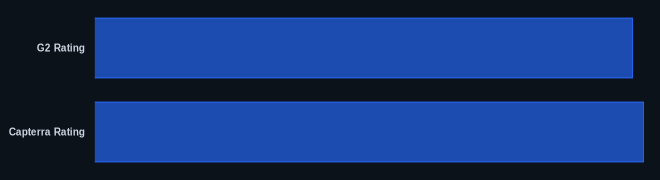
| G2 Rating | 4.3/5 (as of early 2026) | https://www.g2.com/products/mailchimp/reviews |
| Capterra Rating | 4.5/5 (as of early 2026) | https://www.capterra.com/p/158671/Mailchimp/ |
| Starting Price | $0.00/month (as of early 2026) | https://mailchimp.com/pricing/ |
| Free Plan Available | Yes | https://mailchimp.com/pricing/ |
| Key AI Features | Content Generation, Predictive Segmentation, Journey Optimization | https://mailchimp.com/ |
| Primary Focus | Email & Marketing Automation | https://mailchimp.com/ |
| Integrations | Hundreds | https://mailchimp.com/ |
Our Take
Mailchimp has successfully shed its "just email" skin, evolving into a truly intelligent marketing automation platform. Its rapid and deep integration of AI is what sets it apart in 2026, offering capabilities that rival more expensive, enterprise-level solutions, particularly for small to medium businesses. It's not just easy to use anymore; it’s genuinely smart, and that makes a tangible difference in campaign performance and efficiency. Mailchimp earned an impressive 4.3/5 stars on G2 (as of early 2026, based on over 12,000 reviews), proving its AI features and user experience resonate with a large user base.
What’s your current contact list size, and have you found Mailchimp's tiered pricing sustainable as your audience grows?
FAQ
Q: Is Mailchimp still a good option for just email marketing in 2026, or is it overkill with all the new AI features?
A: While Mailchimp has significantly expanded its capabilities, it remains an excellent choice for pure email marketing. Its Free and Essentials plans still provide strong, user-friendly email tools. However, the AI features aren't forced upon you; they're there to enhance your efforts if and when you're ready to use them. For basic needs, it’s not overkill; for growth, it provides a seamless upgrade path.
Q: How does Mailchimp's AI compare to dedicated AI content tools or the AI in a platform like HubSpot?
A: Mailchimp's AI is highly specialized for marketing automation and email content creation within its platform. It excels at generating relevant copy, subject lines, and optimizing journeys based on audience data. While HubSpot’s AI is part of a broader CRM suite, Mailchimp's is more focused and arguably more deeply integrated into the marketing aspects specifically, offering competitive content generation and predictive analytics for its niche. If you need a full CRM with AI across sales, service, and marketing, HubSpot might be better. If marketing automation is your primary concern, Mailchimp's AI is very strong.
Q: My business is growing fast. Will Mailchimp scale with me, or will I hit a wall with its pricing or features?
A: Mailchimp is designed to scale with SMBs. The platform offers a clear progression from its Free plan up to the Premium tier, with features and support expanding at each level. While pricing does increase significantly with contact volume, the advanced features like multivariate testing, predictive segmentation, and unlimited seats in the Premium plan support substantial growth. For exceptionally large enterprises with highly complex, custom CRM needs, you might eventually look at platforms like Salesforce Marketing Cloud, but for the vast majority of growing businesses, Mailchimp offers solid scalability.